<?xml version="1.0" encoding="utf-8"?>
<gallery>

<item id="50" cat="3d">
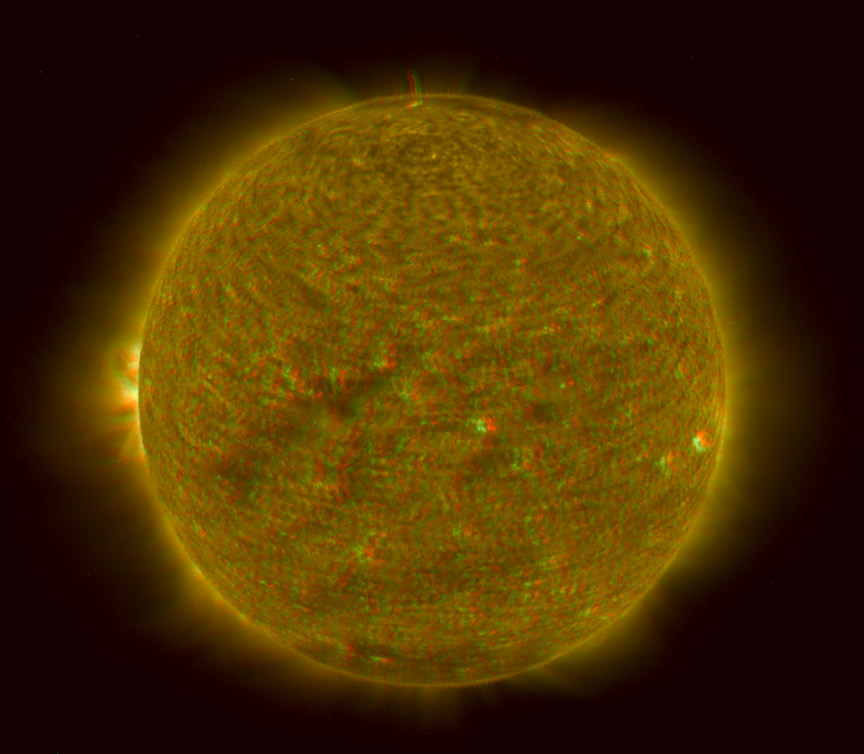
<title>Quiet 3D Sun</title>
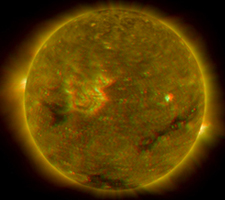
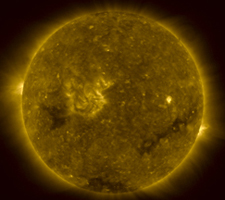
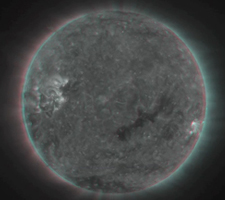
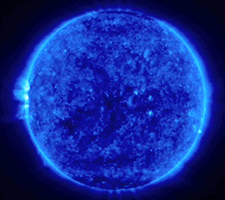
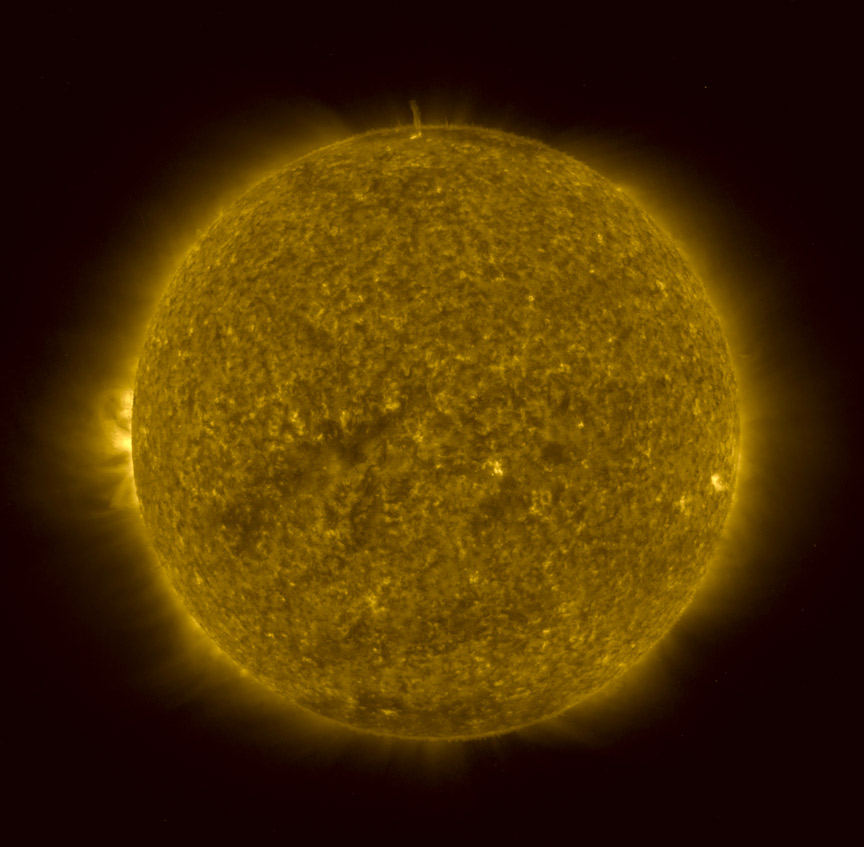
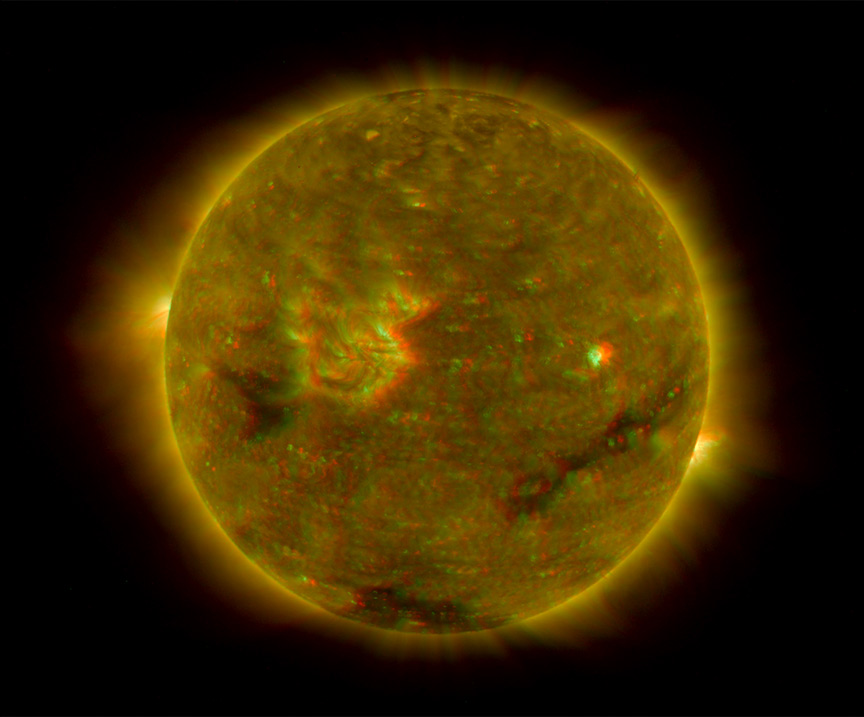
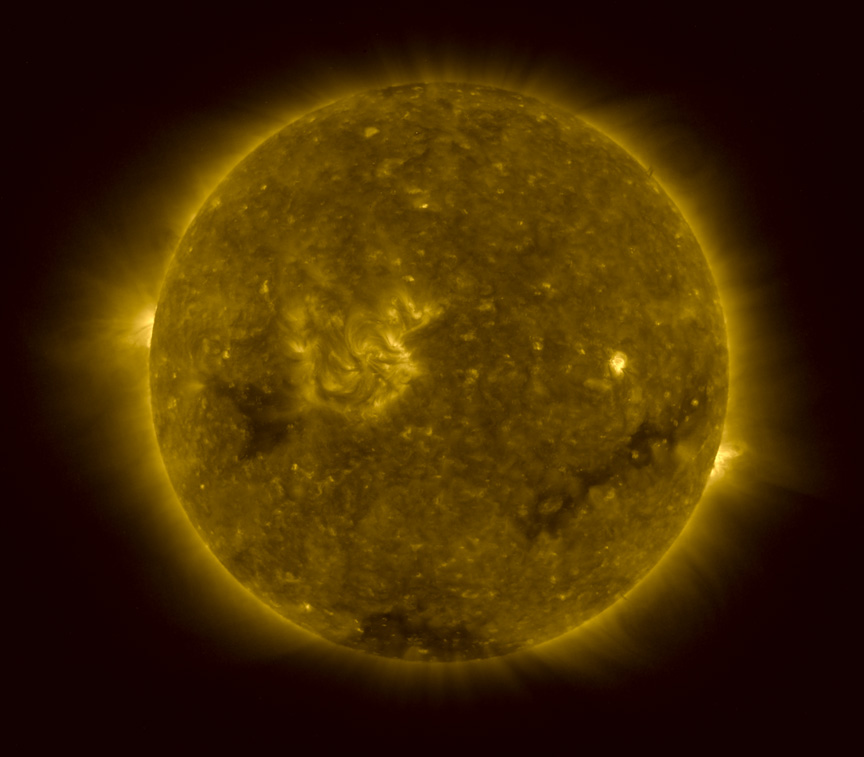
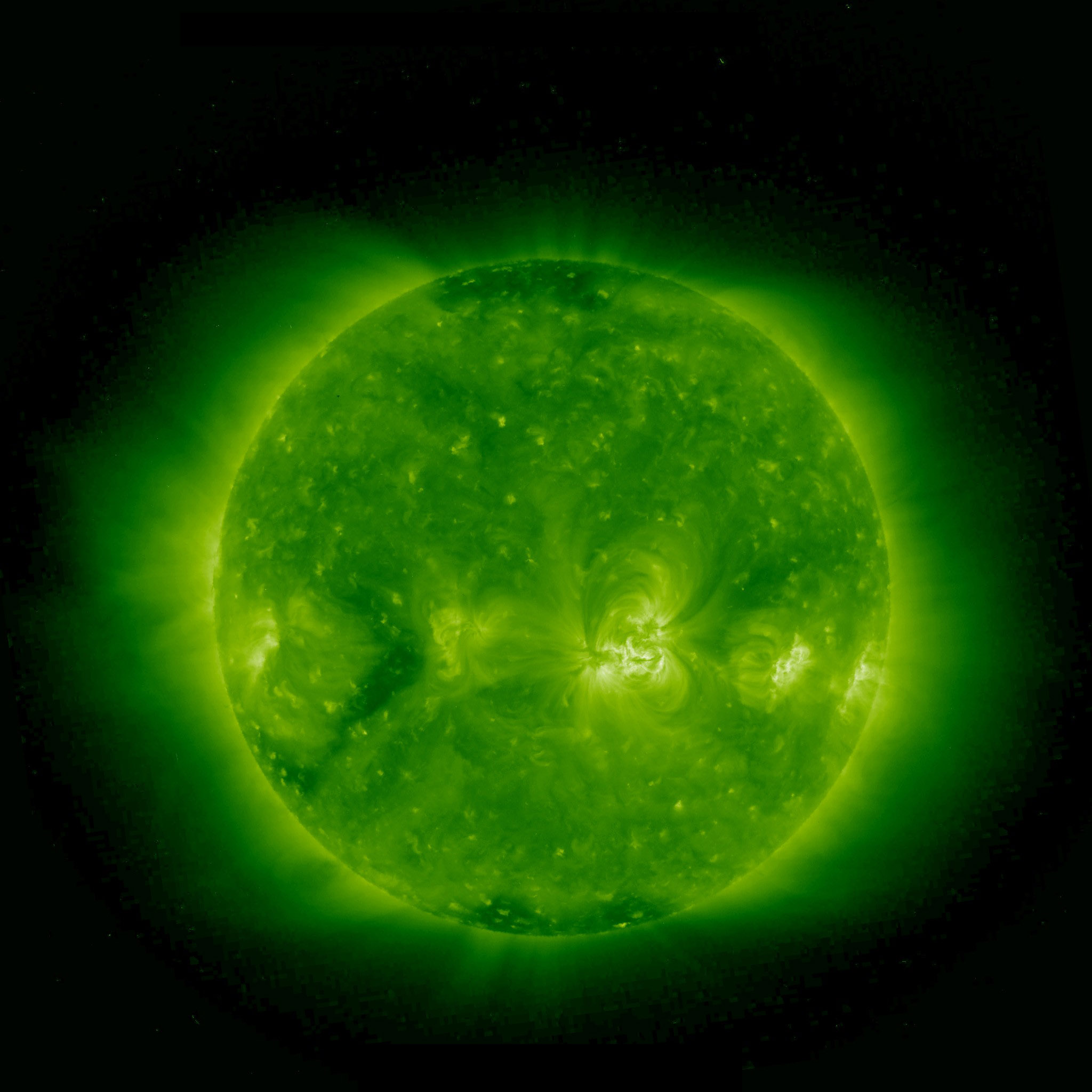
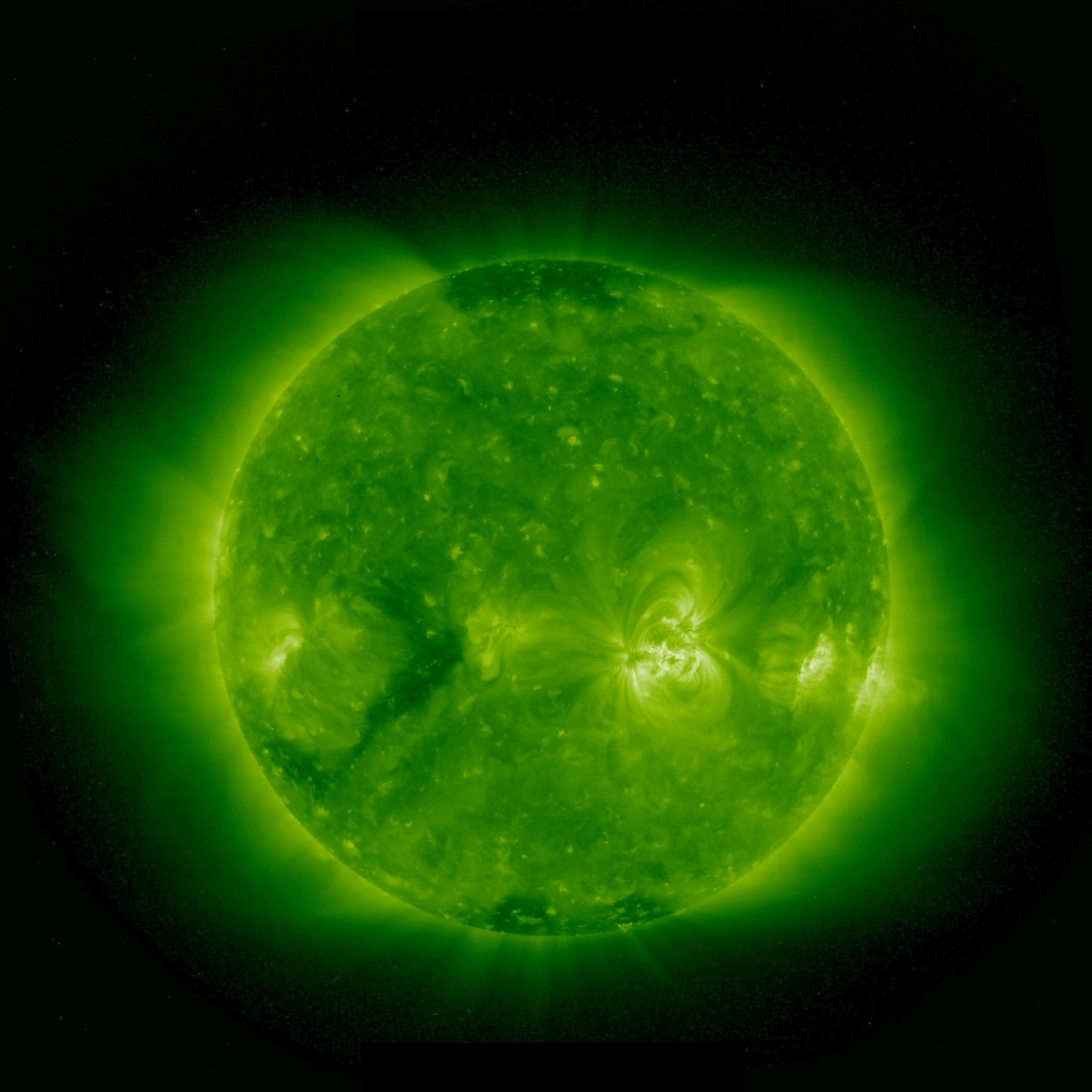
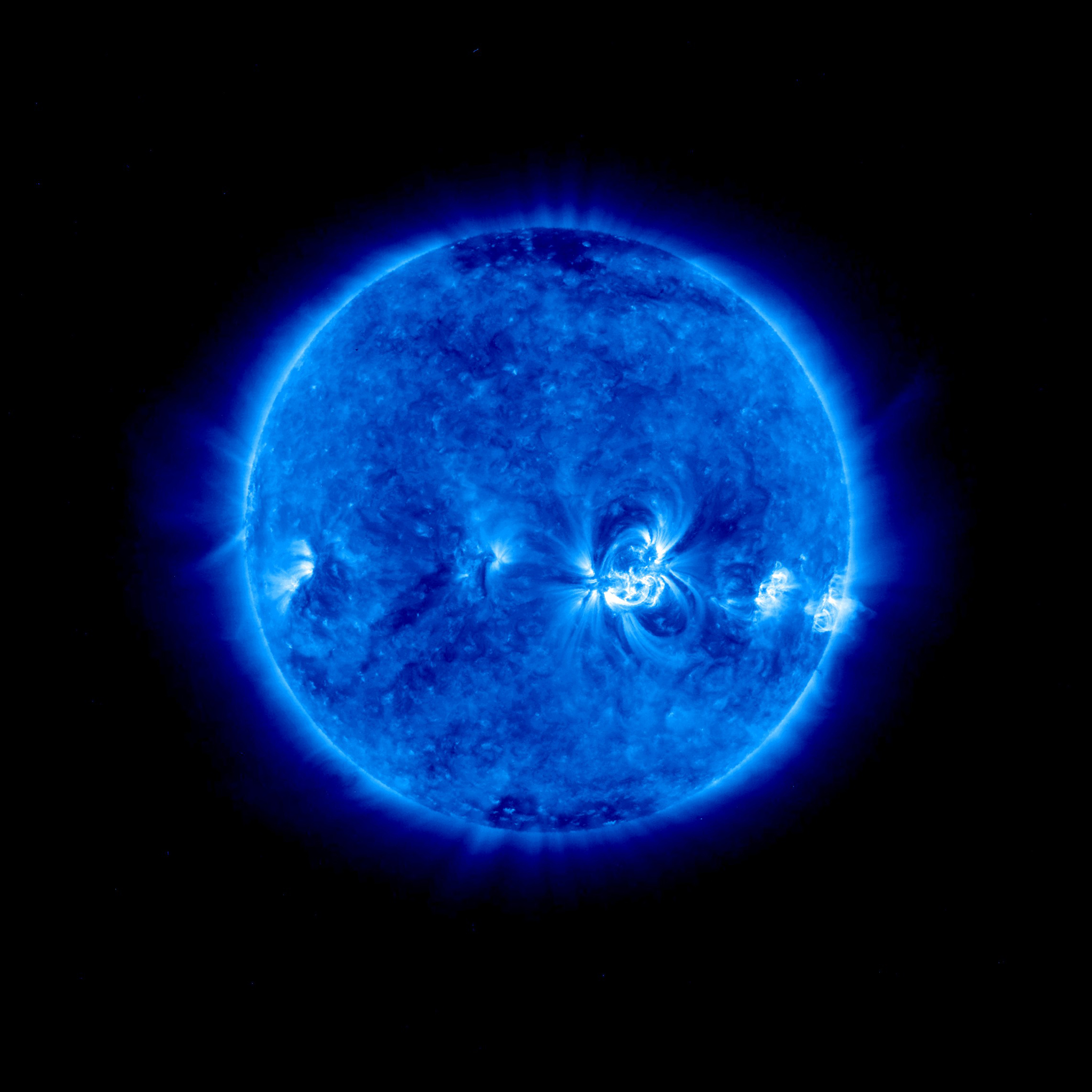
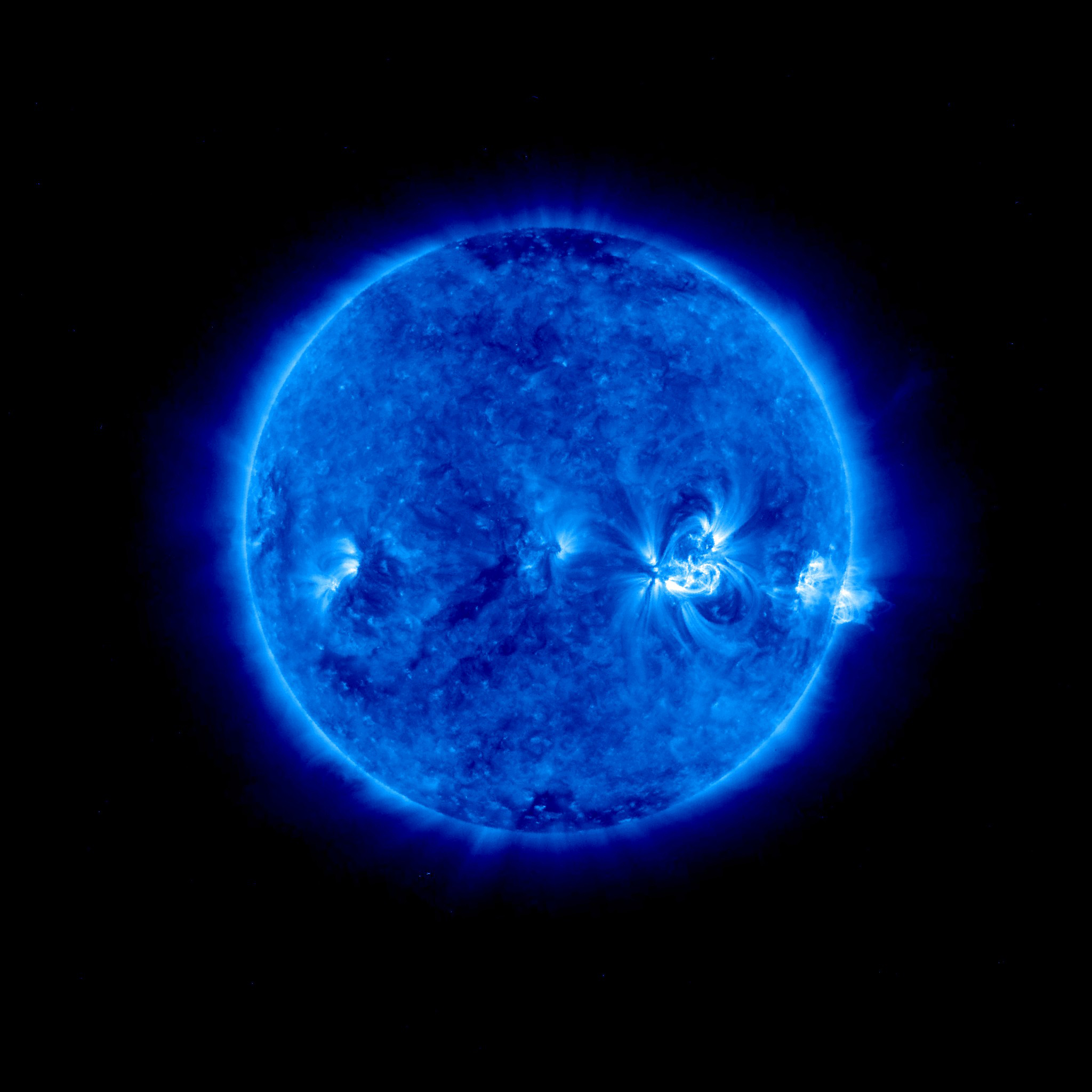
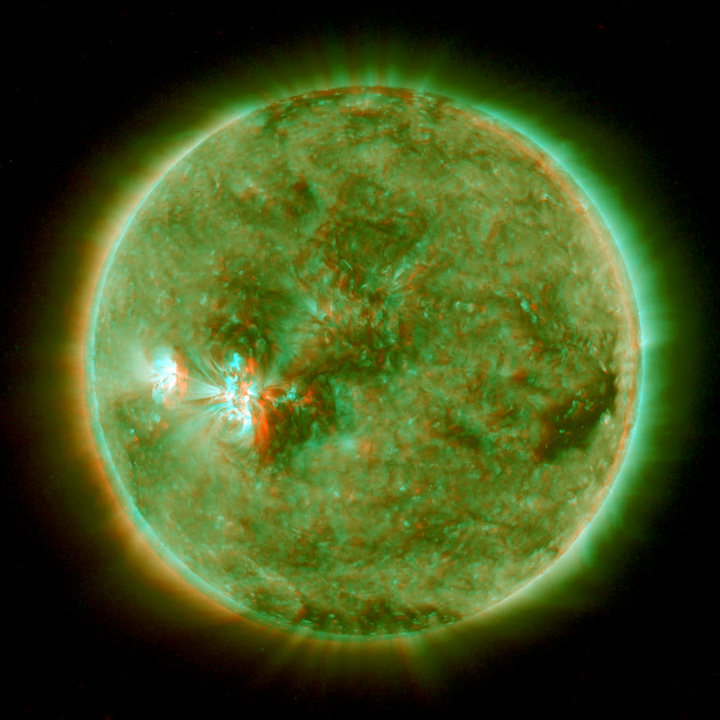
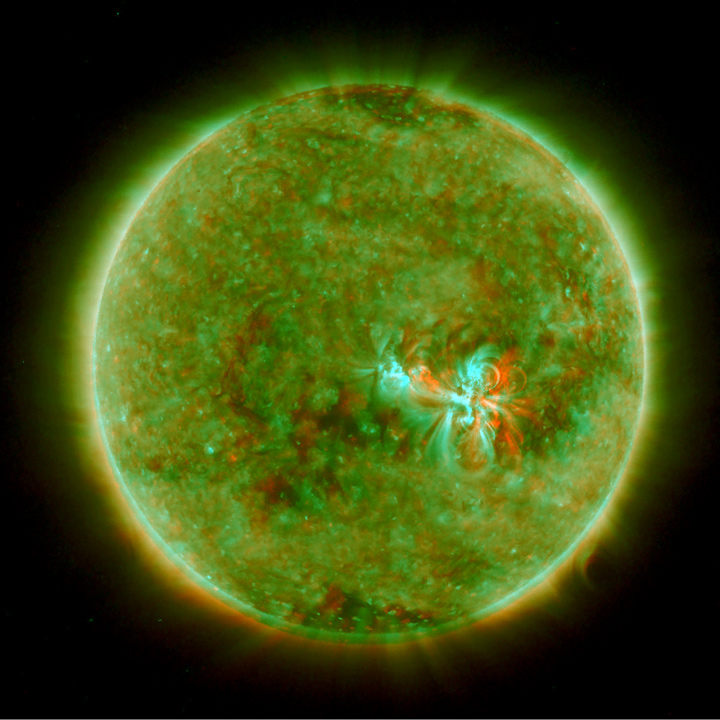
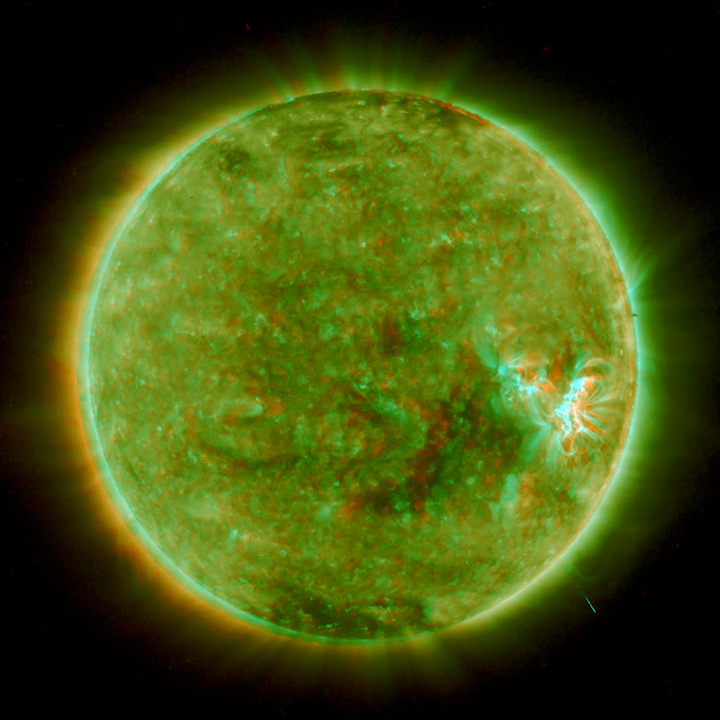
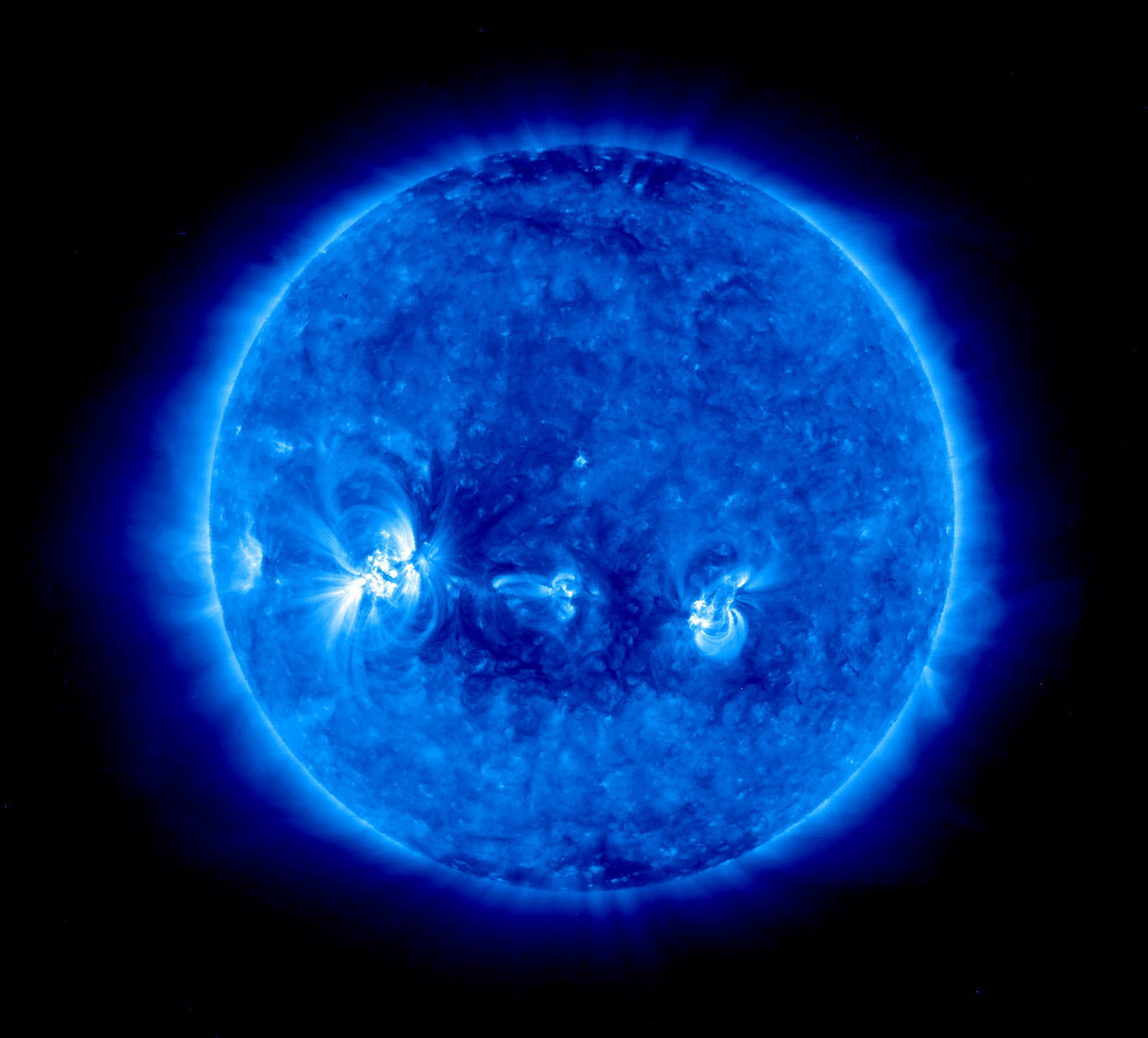
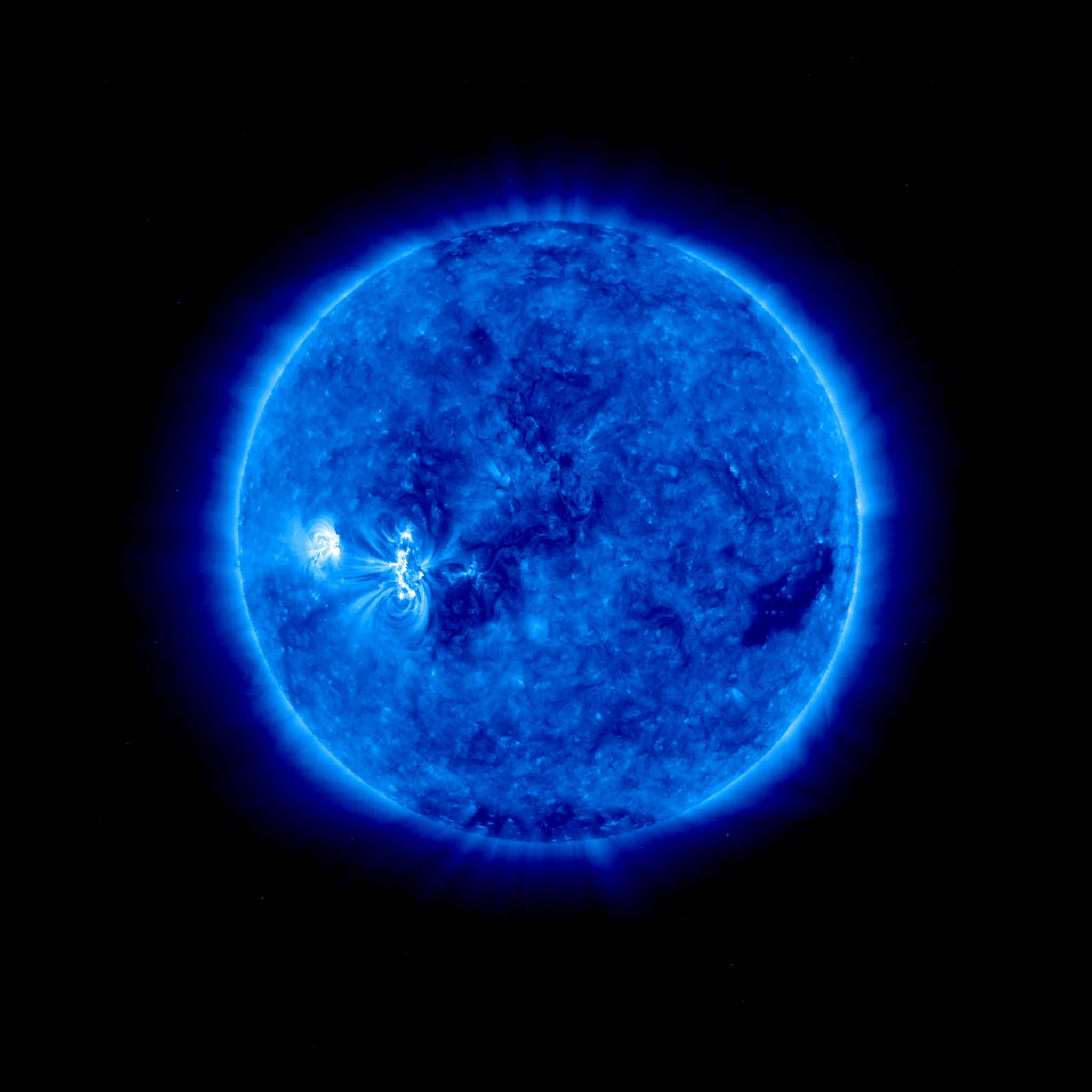
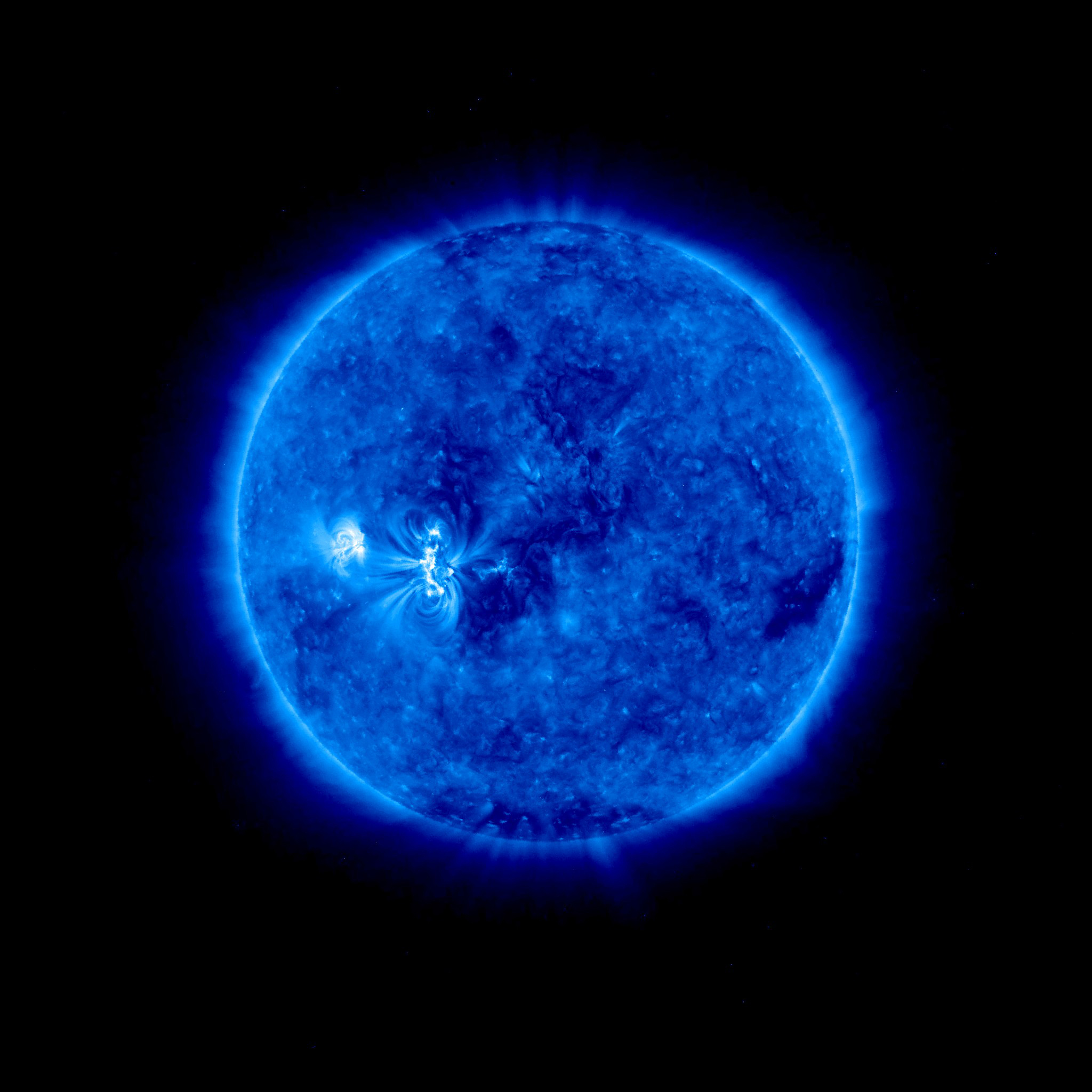
<description><![CDATA[<p>The Sun continues to dwell in its own quiet zone as its level of activity has recently shown almost no signs of rising.  But we can still have some fun with it.  By combining two images taken 12 hours apart by STEREO (Ahead) on August 7, 2009, we can create a nicely rounded Sun (visible with 3D anaglyph glasses).  In those 12 hours, the Sun has rotated around enough to create a sufficiently separated perspective to create 3D.  The Sun in extreme UV light shows us a dark coronal hole near the central line from which fast solar wind is streaming.  We can also see loops of magnetic field lines arcing out and above a small active region to the lower right.</p><p>You can create your own 3D images of the Sun or just about anything else with a digital camera, some software or an online resource, and 3D glasses.  Go here to find out how: http://stereo.gsfc.nasa.gov/classroom/3d.shtml</p>]]></description>
<link>/gallery/item.shtml</link>
<thumbnail>/img/3dimages/3D195_20090807_thumb.jpg</thumbnail>
<images>
	<image>/img/3dimages/preview/3D195_20090807.jpg</image>
	<image>/img/3dimages/preview/195_20090807.jpg</image>
</images>
<movies />
<prints>
	<print>/img/3dimages/print/3D195_20090807.tif</print>
</prints>
</item>

<item id="49" cat="3d">
<title>3D Sun</title>
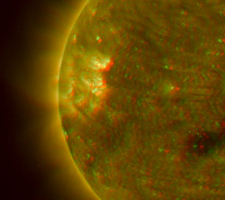
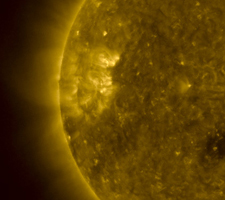
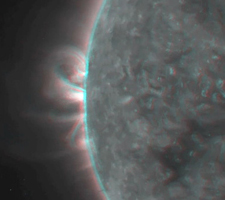
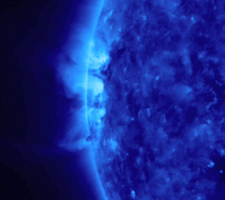
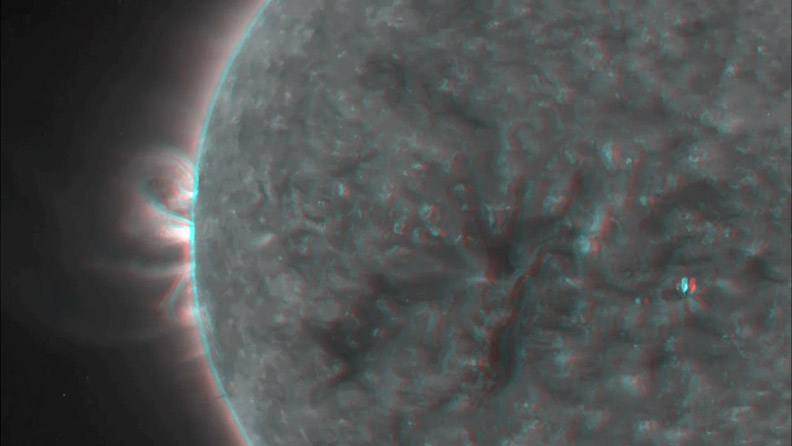
<description><![CDATA[<p>Sequence of STEREO images from February 24, 2007 taken by the EUVI telescope
in the 195 angstroms wavelength, showing a close up of an active region eruption
at the limb.</p>]]></description>
<link>/gallery/item.shtml</link>
<thumbnail>/img/3dimages/195_Left_Limb_Ana_thumb.jpg</thumbnail>
<images>
	<image>/img/3dimages/preview/195_Left_Limb_Ana.jpg</image>
</images>
<movies>
	<movie type="mov" movietitle="Anaglyph" movielink="/img/3dimages/movies/195_Left_Limb_Ana.mov" />
</movies>
<prints />
</item>

<item id="48" cat="3d">
<title>3D Sun</title>
<description><![CDATA[<p>3D HD resolution animation showing 1)Results from a three dimensional 
computation of the magnetic field structure of an active region extrapolating 
the fields from measurements of the magnetic field on the surface of the Sun. 
This model assumes there are no electrical currents in the corona, leading to a 
very simple magnetic configuration. From Tahar Amari, Centre de Physique 
Theorique, Ecole Polytechnique, Paris. 2)Results from a three dimensional 
computation of the magnetic field structure of an active region extrapolating 
the fields from measurements of the magnetic field on the surface of the Sun. 
This model allows currents to flow and assumes force balance, leading to a more 
complex magnetic configuration for the same surface magnetic fields. From Tahar 
Amari. 3)Results from a three dimensional computation of the magnetic field 
structure of the corona extrapolating the fields from measurements of the 
magnetic field on the surface of the Sun. This models the corona for February 
2007. Model from Pete Riley, SAIC, San Diego.</p>]]></description>
<link>/gallery/item.shtml</link>
<thumbnail>/img/3dimages/Solar_Model_Ana_thumb.jpg</thumbnail>
<images>
	<image>/img/3dimages/preview/Solar_Model_Ana.jpg</image>
</images>
<movies>
	<movie type="mov" movietitle="Anaglyph" movielink="/img/3dimages/movies/Solar_Model_Ana.mov" />
	<movie type="mov" movietitle="Left" movielink="/img/3dimages/movies/Solar_Model_Left.mov" />
	<movie type="mov" movietitle="Right" movielink="/img/3dimages/movies/Solar_Model_Right.mov" />
</movies>
<prints />
</item>

<item id="47" cat="3d">
<title>3D Sun - May 1, 2007</title>
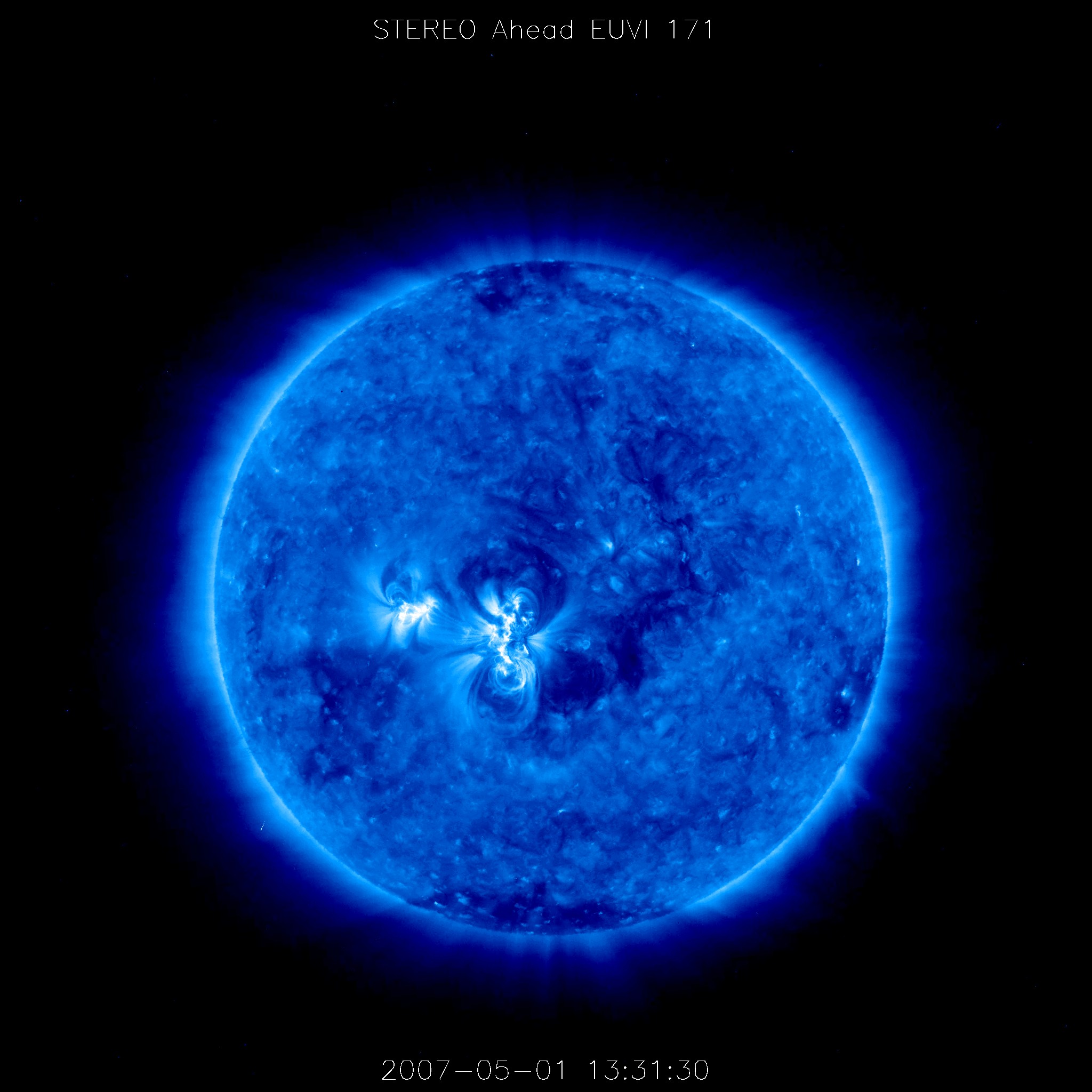
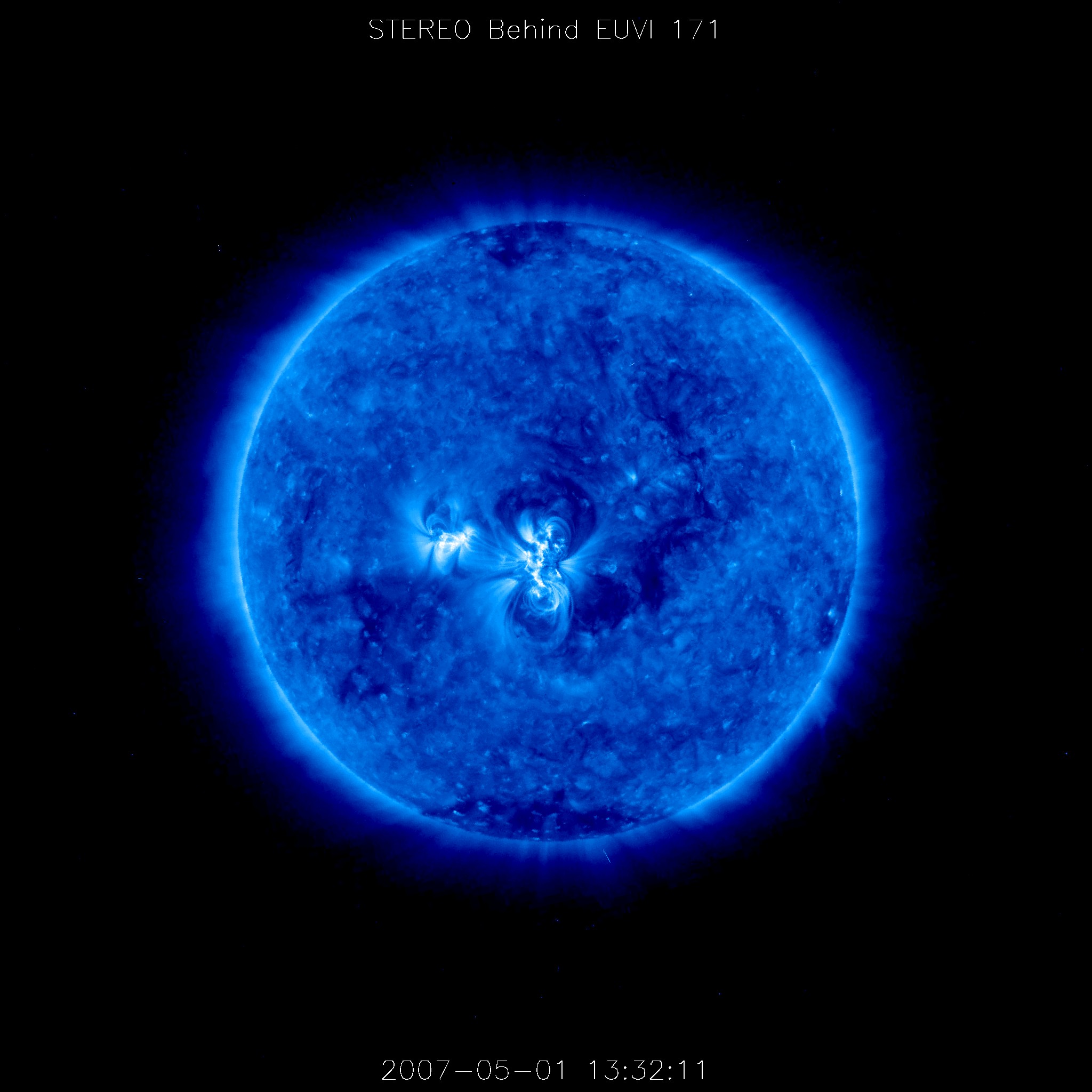
<description><![CDATA[<p>A solar active region is featured by  
combining images from the Ahead and Behind spacecraft taken at the  
same time on May 1, 2007 in the 171 Angstrom wavelength of extreme UV  
light.</p><ul class="list"><li><a href="http://stereo.gsfc.nasa.gov/img/3dimages/preview/20070501_133130_n4euA_171.jpg">STEREO A</a></li><li><a href="http://stereo.gsfc.nasa.gov/img/3dimages/preview/20070501_133130_n4euB_171.jpg">STEREO B</a></li></ul>]]></description>
<link>/gallery/item.shtml</link>
<thumbnail>/img/3dimages/3D_050107sun_thumb.jpg</thumbnail>
<images>
	<image>/img/3dimages/preview/3D_050107sun.jpg</image>
</images>
<movies />
<prints>
	<print>/img/3dimages/print/3D_050107sun.tif</print>
</prints>
</item>

<item id="46" cat="3d">
<title>End of 2008 3D</title>
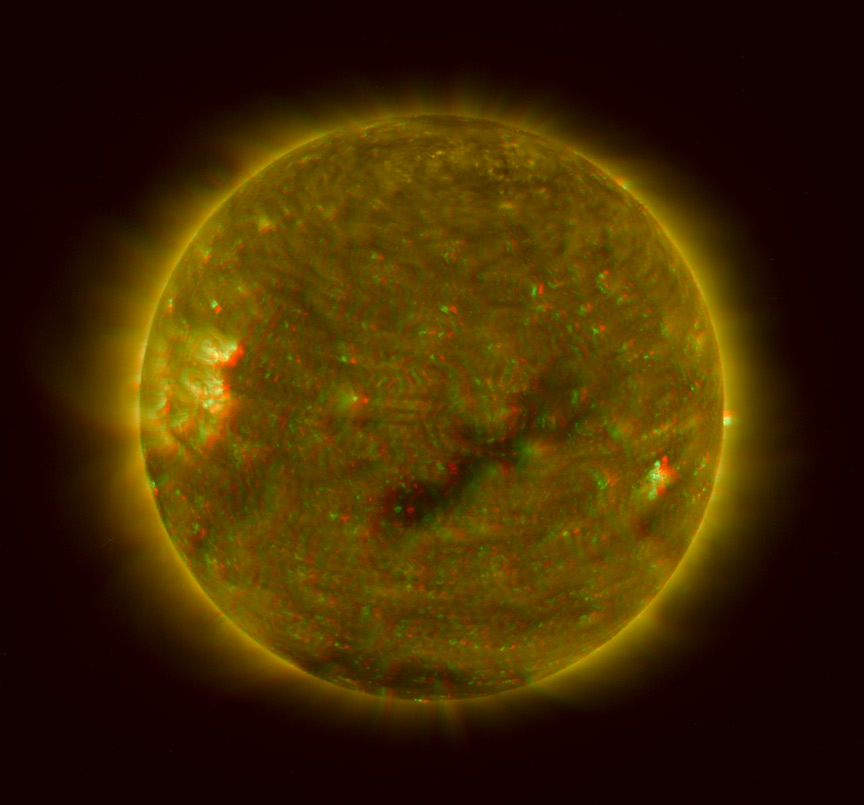
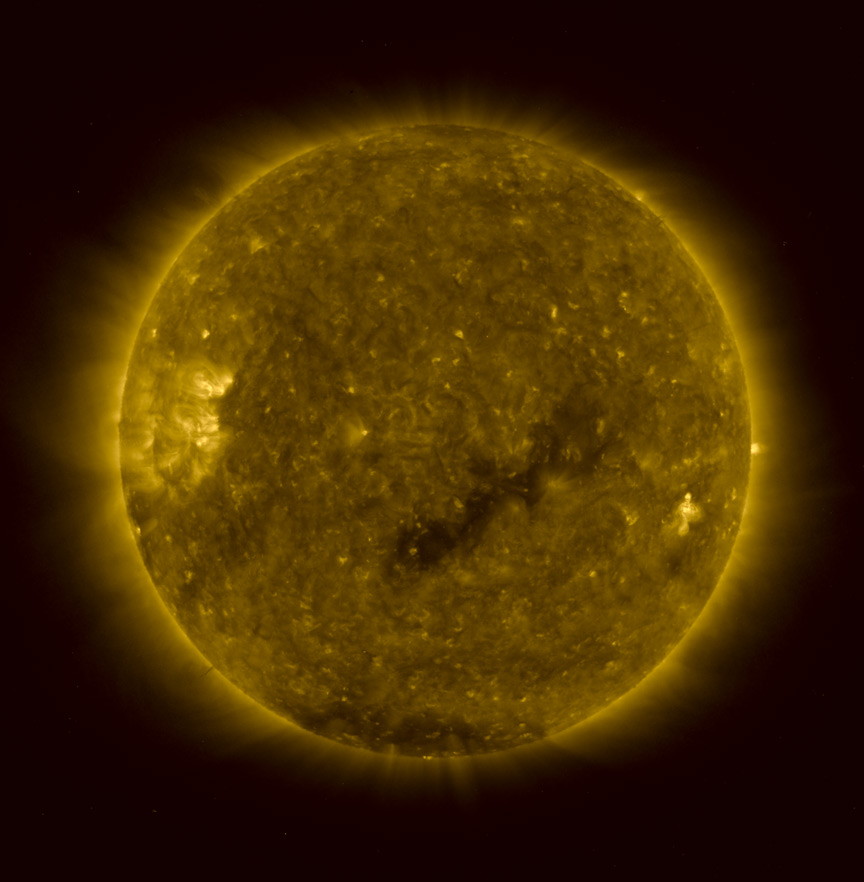
<description><![CDATA[<p>Here we offer a 3D sun image from STEREO (Ahead) as a kind of farewell to a very inactive solar year for 2008. The use of 3D is appropriate since STEREO is the first 3D solar mission ever. 
The north and south polar coronal holes, which appear much darker than the rest of the image, are the most noticeable features of a quiet sun with no active regions at the moment. This image (Dec. 19, 2008) was 
generated by digitally combining two extreme UV images taken 12 hours apart by the same spacecraft, which were then processed to create the depth and roundedness of 3D. 
(This is not true 3D - that could only be produced when the two spacecraft were much closer together than they are now.)</p>]]></description>
<link>/gallery/item.shtml</link>
<thumbnail>/img/3dimages/3D_20081219_thumb.jpg</thumbnail>
<images>
	<image>/img/3dimages/preview/3D_20081219.jpg</image>
</images>
<movies />
<prints>
	<print>/img/3dimages/print/3D_20081219.tif</print>
</prints>
</item>

<item id="45" cat="3d">
<title>Following a 3-D Active Region</title>
<description><![CDATA[<p>In true 3-D we follow an active region as it rotates with the Sun for an entire week (April 29 - May 5, 2007). The Sun is being observed in the 195 wavelength of extreme ultraviolet light. Active regions are the sources of most solar storms. This region appears to show two explosions over this time period.</p>]]></description>
<link>/gallery/item.shtml</link>
<thumbnail>/img/3dimages/3D_EUVI195_0507_thumb.jpg</thumbnail>
<images>
	<image>/img/3dimages/preview/3D_EUVI195_0507.jpg</image>
</images>
<movies>
	<movie type="mov" movietitle="3D_EUV195_0507_bestH264.mov - (209.77 mb)" movielink="/img/3dimages/movies/3D_EUV195_0507_bestH264.mov" />
	<movie type="mov" movietitle="3D_EUV195_0507_med1024.mov - (71.56)" movielink="/img/3dimages/movies/3D_EUV195_0507_med1024.mov" />
	<movie type="mov" movietitle="3D_EUV195_0507_web.mov - (9.82 mb)" movielink="/img/3dimages/movies/3D_EUV195_0507_web.mov" />
	<movie type="mpeg" movietitle="3D_EUV195_0507.mpg - (19.14 mb)" movielink="/img/3dimages/movies/3D_EUV195_0507.mpg" />
</movies>
<prints>
	<print>/img/3dimages/print/3D_EUVI195_0507.tif</print>
</prints>
</item>

<item id="44" cat="3d">
<title>Smaller active regions in 3D</title>
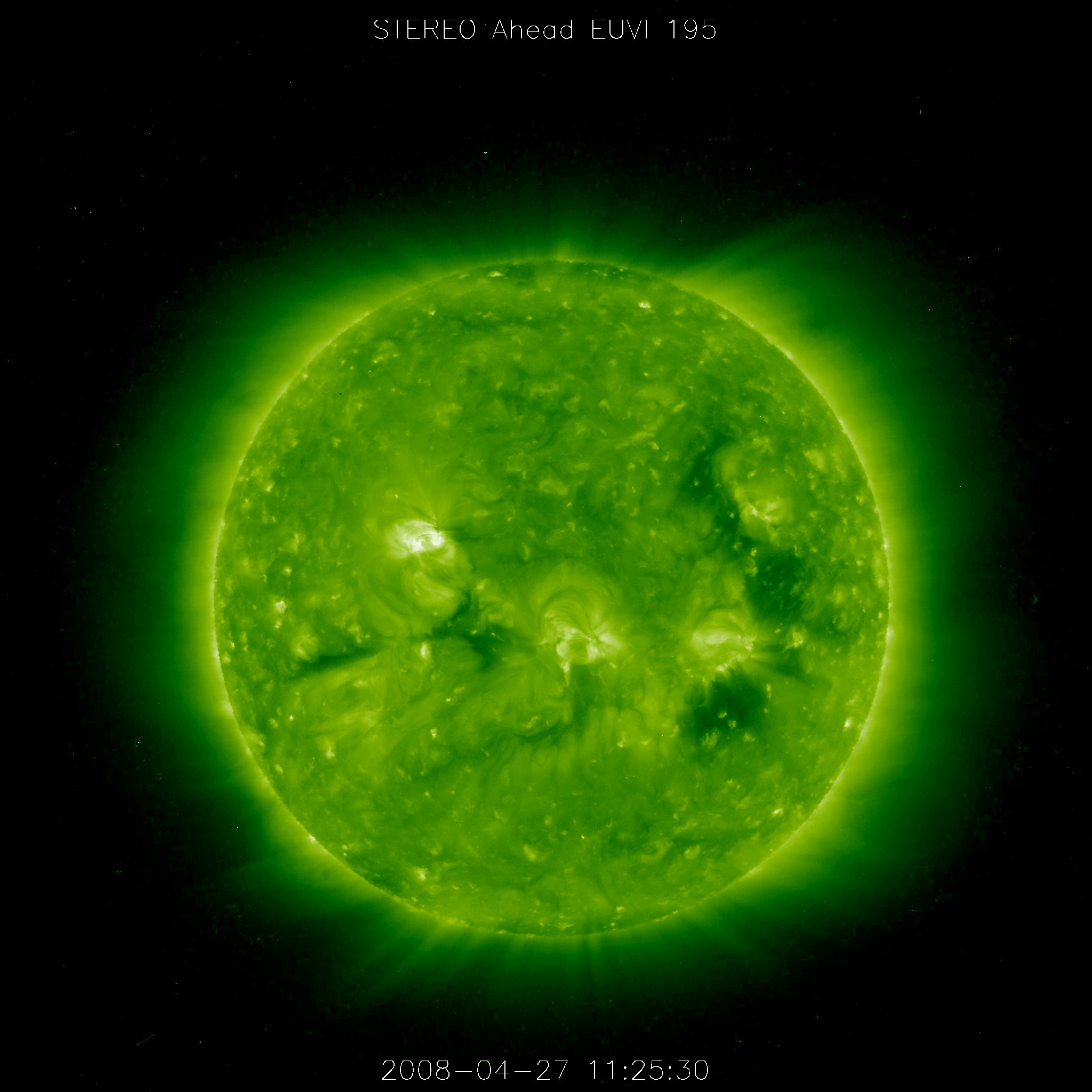
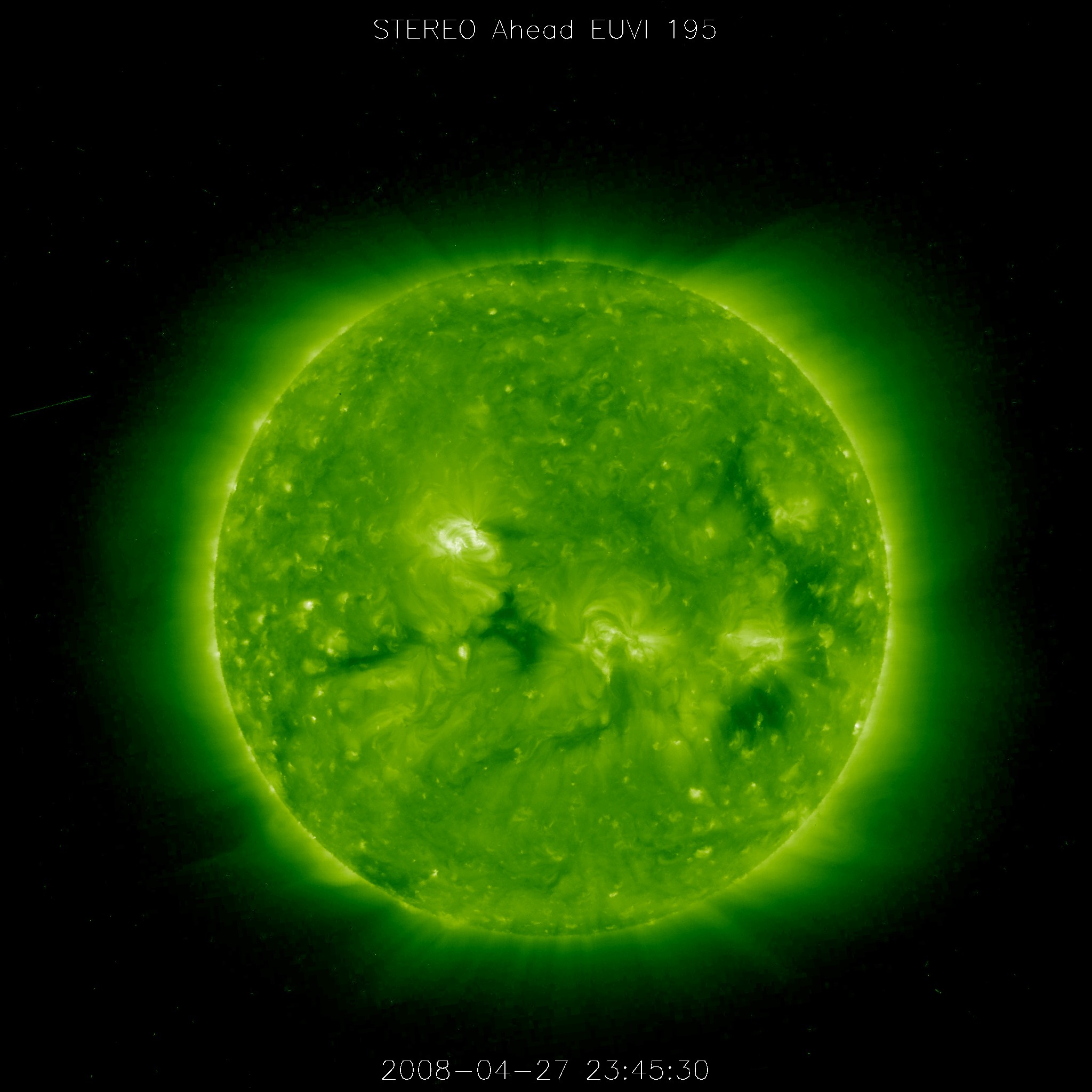
<description><![CDATA[<p>This 3D image shows one distinct and a few smaller active regions that appear brighter in the 195 Angstroms wavelength of extreme UV light. It was made by combining two EUVI 195 images from the Ahead STEREO spacecraft about 11 hours apart on April 27, 2008. (Note, it is not true 3D which would need to be taken from two perspectives at the same time. Since the Sun's rotation moves the features and these features do not change that quickly, this 3D effect can be achieved.) The arcing lines extending above the largest active region show the flow of particles along powerful magnetic field lines that rise above the Sun's surface. Active regions, which are seen as sunspots in visible light, are areas of intense magnetic activity that can last days or even months. The darker areas are small coronal holes.</p><h3>Right and Left Images</h3><ul class="list"><li><a href="http://stereo.gsfc.nasa.gov/img/3dimages/preview/3d20080427_A.jpg">Right Image</a></li><li><a href="http://stereo.gsfc.nasa.gov/img/3dimages/preview/3d20080427_A2.jpg">Left Image</a></li></ul>]]></description>
<link>/gallery/item.shtml</link>
<thumbnail>/img/3dimages/3d20080427_thumb.jpg</thumbnail>
<images>
	<image>/img/3dimages/preview/3d20080427.jpg</image>
</images>
<movies />
<prints>
	<print>/img/3dimages/print/3d20080427.tif</print>
</prints>
</item>

<item id="43" cat="3d">
<title>3D Series of Active Regions - June 9, 2007</title>
<description><![CDATA[<p>This is a 3D image showing a row of several active regions that appear brighter in the 195 Angstroms wavelength of extreme UV light. It was made by combining two EUVI 195 images from the Ahead STEREO spacecraft about 12 hours apart on June 9, 2007. (Thus, it is not true 3D where it would be taken from two perspectives at the same time. Since the Sun's rotation moves the features and these features do not change that quickly, this effect can often be achieved.) The arcing lines extending above the largest active region show the flow of particles along powerful magnetic field lines that rise above the Sun's surface. Active regions, which look like sunspots in visible light, are areas of intense magnetic activity that can last days or even months</p><h3>Right and Left Images</h3><ul class="list"><li><a href="http://stereo.gsfc.nasa.gov/img/3dimages/preview/3DAR060907_195r.jpg">Right Image</a></li><li><a href="http://stereo.gsfc.nasa.gov/img/3dimages/preview/3DAR060907_195l.jpg">Left Image</a></li></ul>]]></description>
<link>/gallery/item.shtml</link>
<thumbnail>/img/3dimages/3DAR060907_195_thumb.jpg</thumbnail>
<images>
	<image>/img/3dimages/preview/3DAR060907_195.jpg</image>
</images>
<movies />
<prints>
	<print>/img/3dimages/print/3DAR060907_195.tif</print>
</prints>
</item>

<item id="42" cat="3d">
<title>Hot Gas in 3D Above the Sun</title>
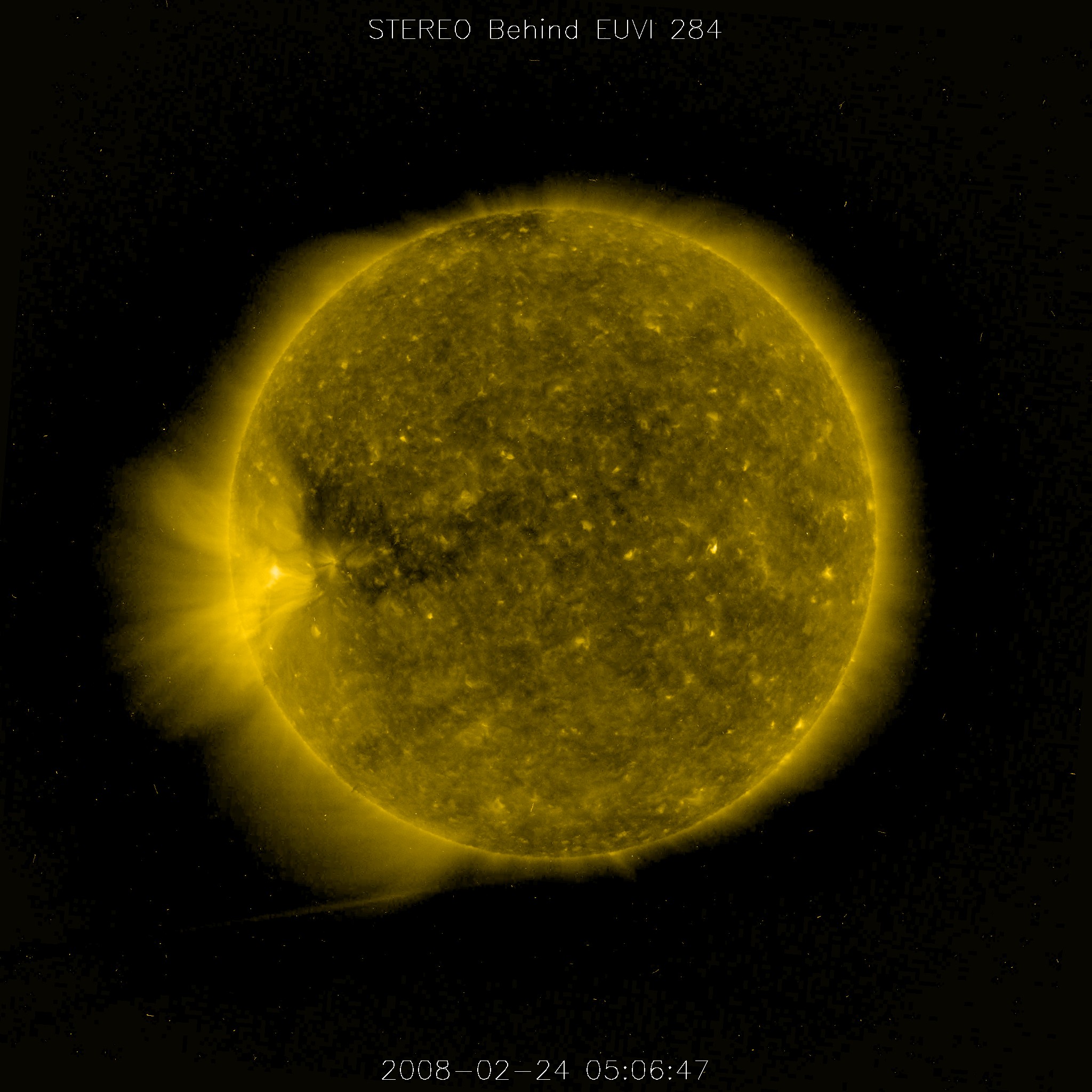
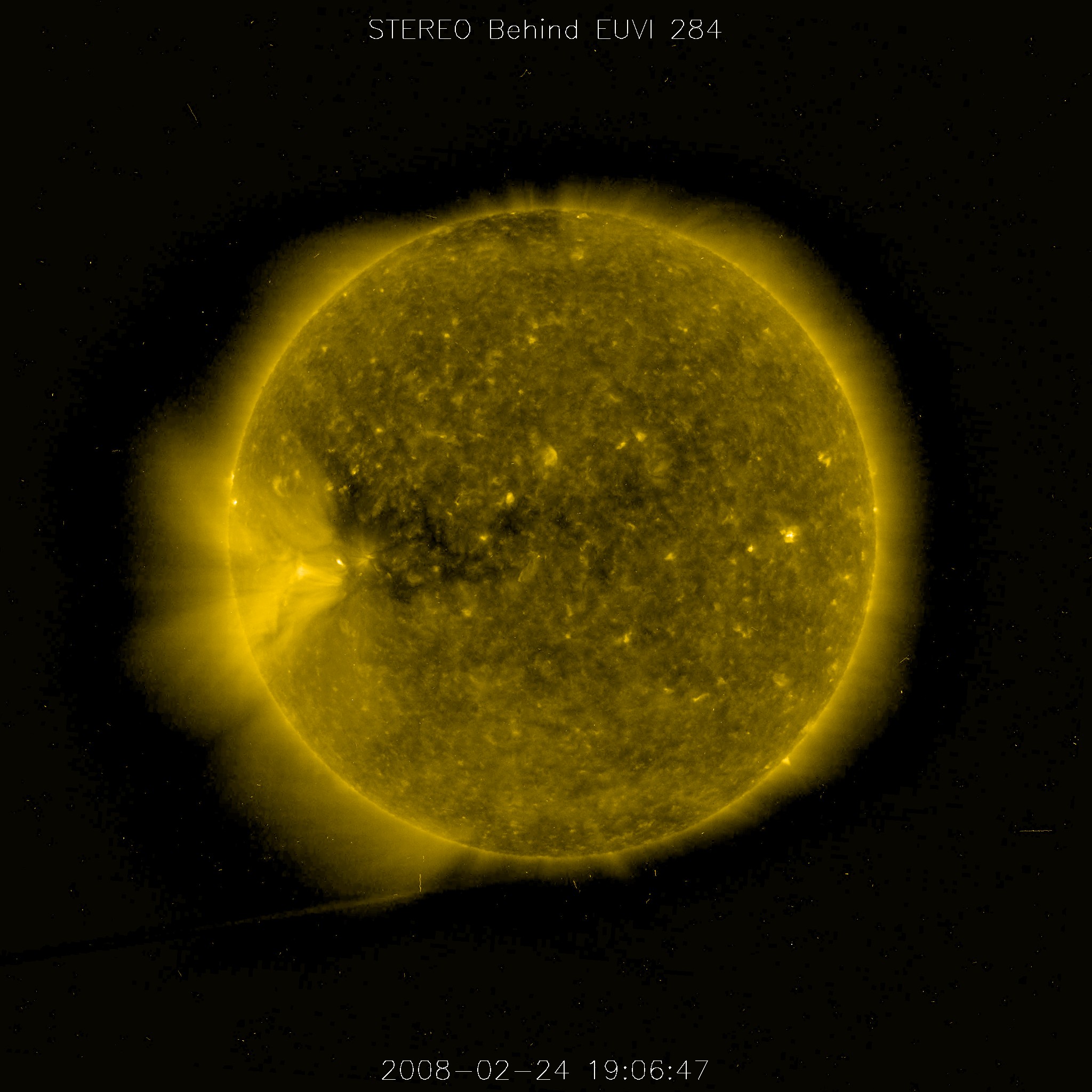
<description><![CDATA[<p>With the Sun observed at about 2.2 million degrees K in extreme UV light (at 284 Angstroms), one can see concentrations of hot gases as a fuzzy, lighter cloud that extends out in the corona above an active region. This image was created by combining two images from STEREO B (Feb. 24, 2008) taken about 12 hours apart, during which the Sun's rotation provides sufficient perspective to create a nice 3D effect. The material above the active region is changing slowly enough that it is possible to use this technique.</p><h3>Right and Left Images</h3><ul class="list"><li><a href="http://stereo.gsfc.nasa.gov/img/3dimages/preview/3DgasLeft1.jpg">Right Image</a></li><li><a href="http://stereo.gsfc.nasa.gov/img/3dimages/preview/3DgasLeft2.jpg">Left Image</a></li></ul>]]></description>
<link>/gallery/item.shtml</link>
<thumbnail>/img/3dimages/3Dgas_thumb.jpg</thumbnail>
<images>
	<image>/img/3dimages/preview/3Dgas.jpg</image>
</images>
<movies />
<prints>
	<print>/img/3dimages/print/3Dgas.tif</print>
</prints>
</item>

<item id="41" cat="3d">
<title>May 1, 2007</title>
<description><![CDATA[<p>Full disk view of an eruptive prominence in the EUVI 304 A waveband, May 1, 2007.</p>
<p><strong>Credit:</strong> NRL, NASA</p>]]></description>
<link>/gallery/item.shtml</link>
<thumbnail>/img/3dimages/304May01_thumb.jpg</thumbnail>
<images>
	<image>/img/3dimages/preview/304May01.jpg</image>
</images>
<movies>
	<movie type="mov" movietitle="304May01_best.mov - (14.67 mb)" movielink="/img/3dimages/movies/304May01_best.mov" />
	<movie type="mov" movietitle="304May01_lo.mov - (1.37 mb)" movielink="/img/3dimages/movies/304May01_lo.mov" />
	<movie type="mpeg" movietitle="304May01.mpg - (3.03 mb)" movielink="/img/3dimages/movies/304May01.mpg" />
</movies>
<prints />
</item>

<item id="40" cat="3d">
<title>Eruptive Prominence - May 19, 2007</title>
<description><![CDATA[<p>Close-up view over a one day period of an eruptive prominence (near disk center) in the 304 A waveband (May 19, 2007).</p><p><strong>Credit:</strong> NRL, NASA</p>]]></description>
<link>/gallery/item.shtml</link>
<thumbnail>/img/3dimages/304_May19_thumb.jpg</thumbnail>
<images>
	<image>/img/3dimages/preview/304_May19.jpg</image>
</images>
<movies>
	<movie type="mov" movietitle="304May19_best.mov - (25.97 mb)" movielink="/img/3dimages/movies/304May19_best.mov" />
	<movie type="mov" movietitle="304May19_lo.mov - (5.09 kb)" movielink="/img/3dimages/movies/304May19_lo.mov" />
	<movie type="mpeg" movietitle="304May19.mpg - (3.03 mb)" movielink="/img/3dimages/movies/304May19.mpg" />
</movies>
<prints />
</item>

<item id="39" cat="3d">
<title>CME - May 19, 2007</title>
<description><![CDATA[<p>A coronal mass ejection is observed in this close-up of six hours in the 171 A waveband (May 19, 2007).</p><p><strong>Credit:</strong> NRL, NASA</p>]]></description>
<link>/gallery/item.shtml</link>
<thumbnail>/img/3dimages/171May19_thumb.jpg</thumbnail>
<images>
	<image>/img/3dimages/preview/171May19.jpg</image>
</images>
<movies>
	<movie type="mov" movietitle="171_May19_best.mov - (13.29 mb)" movielink="/img/3dimages/movies/171_May19_best.mov" />
	<movie type="mov" movietitle="171_May19_lo.mov - (2.08 kb)" movielink="/img/3dimages/movies/171_May19_lo.mov" />
	<movie type="mpeg" movietitle="171_May19.mpg - (3.26 mb)" movielink="/img/3dimages/movies/171_May19.mpg" />
</movies>
<prints />
</item>

<item id="38" cat="3d">
<title>CME - May 16, 2007</title>
<description><![CDATA[<p>A coronal mass ejection erupts from an active region in the 171 A waveband over six hours (May 16, 2007)</p><p><strong>Credit:</strong> NRL, NASA</p>]]></description>
<link>/gallery/item.shtml</link>
<thumbnail>/img/3dimages/171_May16_thumb.jpg</thumbnail>
<images>
	<image>/img/3dimages/preview/171_May16.jpg</image>
</images>
<movies>
	<movie type="mov" movietitle="171May16_best.mov - (23.07 mb)" movielink="/img/3dimages/movies/171May16_best.mov" />
	<movie type="mov" movietitle="171May16_lo.mov - (976 kb)" movielink="/img/3dimages/movies/171May16_lo.mov" />
	<movie type="mpeg" movietitle="171May16.mpg - (5.09 mb)" movielink="/img/3dimages/movies/171May16.mpg" />
</movies>
<prints />
</item>

<item id="37" cat="3d">
<title>3D Coronal Hole - October 21, 2007</title>
<description><![CDATA[<p>A 3D coronal hole seen just to the right of the Sun's center in extreme UV light from the STEREO's Behind spacecraft in the 195 Angstrom wavelength. Coronal holes, which appear darker when observed in UV light) are magnetically open areas from which the high-speed solar wind streams into space. This is not a true 3D image (taken from two perspectives at the same time). This image was created by combining two images taken 12 hours apart during which the Sun's rotation provides sufficient perspective to create a nice 3D effect. The coronal hole is changing slowly enough that it is possible to use this technique.</p><h3>Right and Left Images</h3><ul class="list"><li><a href="http://stereo.gsfc.nasa.gov/img/3dimages/print/2D_102107_second.tif">Right Image</a></li><li><a href="http://stereo.gsfc.nasa.gov/img/3dimages/print/2D_102107_first.tif">Left Image</a></li></ul>]]></description>
<link>/gallery/item.shtml</link>
<thumbnail>/img/3dimages/102107coronalhole_thumb.jpg</thumbnail>
<images>
	<image>/img/3dimages/preview/3D_102107_195.jpg</image>
</images>
<movies />
<prints>
	<print>/img/3dimages/print/3D_102107_195.tif</print>
</prints>
</item>

<item id="36" cat="3d">
<title>May 12-17, 2007</title>
<description><![CDATA[<p>Half disk observation of an active region crossing the Sun using EUVI 195 A data (May 12-17, 2007)</p><p><strong>Credit:</strong> NASA/JPL-Caltech/NRL</p>]]></description>
<link>/gallery/item.shtml</link>
<thumbnail>/img/3dimages/051207_195_thumb.jpg</thumbnail>
<images>
	<image>/img/3dimages/preview/051207_195.jpg</image>
</images>
<movies>
	<movie type="mov" movietitle="051207_195.mov - (77.54 mb)" movielink="/img/3dimages/movies/051207_195.mov" />
	<movie type="mov" movietitle="051207_195lo.mov - (5.66 mb)" movielink="/img/3dimages/movies/051207_195lo.mov" />
	<movie type="mpeg" movietitle="051207_195.mpg - (10.57 mb)" movielink="/img/3dimages/movies/051207_195.mpg" />
</movies>
<prints />
</item>

<item id="35" cat="3d">
<title>May 12-17, 2007</title>
<description><![CDATA[<p>Full disk observation at EUVI 304 Angstroms (May 12-17, 2007)</p><p><strong>Credit:</strong> NASA/JPL-Caltech/NRL</p>]]></description>
<link>/gallery/item.shtml</link>
<thumbnail>/img/3dimages/051207_304full_thumb.jpg</thumbnail>
<images>
	<image>/img/3dimages/preview/051207_304full.jpg</image>
</images>
<movies>
	<movie type="mov" movietitle="051207_304full.mov - (136.20 mb)" movielink="/img/3dimages/movies/051207_304full.mov" />
	<movie type="mov" movietitle="051207_304full_lo.mov - (16.91 mb)" movielink="/img/3dimages/movies/051207_304full_lo.mov" />
	<movie type="mpeg" movietitle="051207_304full.mpg - (17.49 mb)" movielink="/img/3dimages/movies/051207_304full.mpg" />
</movies>
<prints />
</item>

<item id="34" cat="3d">
<title>May 12, 2007</title>
<description><![CDATA[<p>This is a brief close-up clip of a looping prominence in 3D in the EUVI 304 A data (May 12, 2007)</p><p><strong>Credit:</strong> NASA/JPL-Caltech/NRL</p>]]></description>
<link>/gallery/item.shtml</link>
<thumbnail>/img/3dimages/051207_304limb_thumb.jpg</thumbnail>
<images>
	<image>/img/3dimages/preview/051207_304limb.jpg</image>
</images>
<movies>
	<movie type="mov" movietitle="051207_304limb.mov - (4.10 mb)" movielink="/img/3dimages/movies/051207_304limb.mov" />
	<movie type="mpeg" movietitle="051207_304limb.mpg - (347 kb)" movielink="/img/3dimages/movies/051207_304limb.mpg" />
</movies>
<prints />
</item>

<item id="33" cat="3d">
<title>May 15-16, 2007</title>
<description><![CDATA[<p>A close-up of an arcade of loops that spiral above an active region in 3D in the EUVI 195 A data (May 15-16, 2007)</p><p><strong>Credit:</strong> NASA/JPL-Caltech/NRL</p>]]></description>
<link>/gallery/item.shtml</link>
<thumbnail>/img/3dimages/051507_195arcade_thumb.jpg</thumbnail>
<images>
	<image>/img/3dimages/preview/051507_195arcade.jpg</image>
</images>
<movies>
	<movie type="mov" movietitle="051507_195arcade.mov - (5.18 mb)" movielink="/img/3dimages/movies/051507_195arcade.mov" />
	<movie type="mpeg" movietitle="051507_195arcade.mpg - (1.25 mb)" movielink="/img/3dimages/movies/051507_195arcade.mpg" />
</movies>
<prints />
</item>

<item id="32" cat="3d">
<title>May 16, 2007</title>
<description><![CDATA[<p>Half-disk clip of an eruptive prominence in EUVI 304 A (May 16, 2007)</p><p><strong>Credit:</strong> NASA/JPL-Caltech/NRL</p>]]></description>
<link>/gallery/item.shtml</link>
<thumbnail>/img/3dimages/051607_304prom_thumb.jpg</thumbnail>
<images>
	<image>/img/3dimages/preview/051607_304prom.jpg</image>
</images>
<movies>
	<movie type="mov" movietitle="051607_304prom.mov - (5.41 mb)" movielink="/img/3dimages/movies/051607_304prom.mov" />
	<movie type="mpeg" movietitle="051607_304prom.mpg - (463 kb)" movielink="/img/3dimages/movies/051607_304prom.mpg" />
</movies>
<prints />
</item>

<item id="31" cat="3d">
<title>May 17-23, 2007</title>
<description><![CDATA[<p>Long clip of an active region crossing the Sun using EUVI 195 A data showing half the disk (May
17-23, 2007). The active region moving along the top half of the frame erupts a number of times during this period. Note the CME realted, outward moving  wave on May 19.</p><p><strong>Credit:</strong> NASA/JPL-Caltech/NRL</p>]]></description>
<link>/gallery/item.shtml</link>
<thumbnail>/img/3dimages/051707_195_thumb.jpg</thumbnail>
<images>
	<image>/img/3dimages/preview/051707_195.jpg</image>
</images>
<movies>
	<movie type="mov" movietitle="051707_195.mov - (65.68 mb)" movielink="/img/3dimages/movies/051707_195.mov" />
	<movie type="mov" movietitle="051707_195lo.mov - (5.34 mb)" movielink="/img/3dimages/movies/051707_195lo.mov" />
	<movie type="mpeg" movietitle="051707_195.mpg - (8.88 mb)" movielink="/img/3dimages/movies/051707_195.mpg" />
</movies>
<prints />
</item>

<item id="30" cat="3d">
<title>May 17-22, 2007</title>
<description><![CDATA[<p>Full disk observation at EUVI 304 Angstroms (May 17-22, 2007)</p><p><strong>Credit:</strong> NASA/JPL-Caltech/NRL</p>]]></description>
<link>/gallery/item.shtml</link>
<thumbnail>/img/3dimages/051707_304full_thumb.jpg</thumbnail>
<images>
	<image>/img/3dimages/preview/051707_304full.jpg</image>
</images>
<movies>
	<movie type="mov" movietitle="051707_304full.mov - (136.20 mb)" movielink="/img/3dimages/movies/051707_304full.mov" />
	<movie type="mov" movietitle="051707_304full_lo.mov - (16.91 mb)" movielink="/img/3dimages/movies/051707_304full_lo.mov" />
	<movie type="mpeg" movietitle="051707_304full.mpg - (17.49 mb)" movielink="/img/3dimages/movies/051707_304full.mpg" />
</movies>
<prints />
</item>

<item id="29" cat="3d">
<title>May 20, 2007</title>
<description><![CDATA[<p>Short 3D clip of an eruption from an active region in the EUVI 304 A data (May 20, 2007)</p><p><strong>Credit:</strong> NASA/JPL-Caltech/NRL</p>]]></description>
<link>/gallery/item.shtml</link>
<thumbnail>/img/3dimages/052007_304long_thumb.jpg</thumbnail>
<images>
	<image>/img/3dimages/preview/052007_304long.jpg</image>
</images>
<movies>
	<movie type="mov" movietitle="052007_304long.mov - (8.20 mb)" movielink="/img/3dimages/movies/052007_304long.mov" />
	<movie type="mpeg" movietitle="052007_304long.mpg - (464 kb)" movielink="/img/3dimages/movies/052007_304long.mpg" />
</movies>
<prints />
</item>

<item id="28" cat="3d">
<title>May 22, 2007</title>
<description><![CDATA[<p>Close-up of an active region with an eruption in EUVI 195 A (May 22, 2007)</p><p><strong>Credit:</strong> NASA/JPL-Caltech/NRL</p>]]></description>
<link>/gallery/item.shtml</link>
<thumbnail>/img/3dimages/052207_195long_thumb.jpg</thumbnail>
<images>
	<image>/img/3dimages/preview/052207_195long.jpg</image>
</images>
<movies>
	<movie type="mov" movietitle="052207_195long.mov - (5.62 mb)" movielink="/img/3dimages/movies/052207_195long.mov" />
	<movie type="mpeg" movietitle="052207_195long.mpg - (964 kb)" movielink="/img/3dimages/movies/052207_195long.mpg" />
</movies>
<prints />
</item>

<item id="27" cat="3d">
<title>3D Sun - March 30, 2007</title>
<description><![CDATA[<p>This is a 3D image of an active region and coronal holes in the 171 Angstrom wavelength of extreme ultraviolet light. We combined two EUVI 171 images from by the two STEREO spacecraft taken at the same time (March 30, 2007). The arcing lines (upper left) extending above an active region show the flow of particles along powerful magnetic field lines that rise above the Sun's surface. Active regions, which look like sunspots in normal filtered light, are areas of intense magnetic activity that can last days or even months. The much darker regions at the top, mid-section and bottom are coronal holes, magnetically open areas from which high speed solar wind is emitted.</p><h3>Right and Left Images</h3><ul class="list"><li><a href="http://stereo.gsfc.nasa.gov/img/3dimages/print/3DAR033007a.tif">Ahead</a></li><li><a href="http://stereo.gsfc.nasa.gov/img/3dimages/print/3DAR033007b.tif">Behind</a></li></ul>]]></description>
<link>/gallery/item.shtml</link>
<thumbnail>/img/3dimages/3DAR033007_thumb.jpg</thumbnail>
<images>
	<image>/img/3dimages/preview/3DAR033007.jpg</image>
</images>
<movies />
<prints>
	<print>/img/3dimages/print/3DAR033007.tif</print>
</prints>
</item>

<item id="26" cat="3d">
<title>Frenetic Active Region - May 16, 2007</title>
<description><![CDATA[<p>In this 3D STEREO image of the Sun in extreme ultraviolet light (May 16, 2007) one can see two active regions with bright arcing loops above them. The bright region on the left particularly shows particles trapped along many tangled magnetic field lines. Active regions are areas of intense magnetic activity that appear brighter in extreme UV light, in this case the wavelength of 195 Angstroms. The 3D image was made by combining simultaneous images from the two STEREO spacecraft.</p><h3>Right and Left Images</h3><ul class="list"><li><a href="http://stereo.gsfc.nasa.gov/img/3dimages/preview/3DfreneticAR051607_r.jpg">Right Image</a></li><li><a href="http://stereo.gsfc.nasa.gov/img/3dimages/preview/3DfreneticAR051607_l.jpg">Left Image</a></li></ul>]]></description>
<link>/gallery/item.shtml</link>
<thumbnail>/img/3dimages/3DfreneticAR051607_thumb.jpg</thumbnail>
<images>
	<image>/img/3dimages/preview/3DfreneticAR051607.jpg</image>
</images>
<movies />
<prints>
	<print>/img/3dimages/print/3DfreneticAR051607.tif</print>
</prints>
</item>

<item id="25" cat="3d">
<title>3D Active Region - June 9, 2007</title>
<description><![CDATA[<p>This is a 3D image of an active region in the 171 Angstrom wavelength of extreme ultraviolet light. It was made by combining two EUVI 171 images from by the two STEREO spacecraft at the same time on June 9, 2007. The arcing lines extending above the active region show the flow of particles along powerful magnetic field lines that rise above the Sun's surface. Active regions, which look like sunspots in normal filtered light, are areas of intense magnetic activity that can last days or even months.</p><h3>Right and Left Images</h3><ul class="list"><li><a href="http://stereo.gsfc.nasa.gov/img/3dimages/preview/3DAR060907_right.jpg">Right Image</a></li><li><a href="http://stereo.gsfc.nasa.gov/img/3dimages/preview/3DAR060907_left.jpg">Left Image</a></li></ul>]]></description>
<link>/gallery/item.shtml</link>
<thumbnail>/img/3dimages/3DAR060907_thumb.jpg</thumbnail>
<images>
	<image>/img/3dimages/preview/3DAR060907.jpg</image>
</images>
<movies />
<prints>
	<print>/img/3dimages/print/3DAR060907.tif</print>
</prints>
</item>

<item id="24" cat="3d">
<title>Solar Sequence in 3D, 4/29/07 - 5/5/07</title>
<description><![CDATA[<p>By combining images taken almost simultaneously from the Ahead and Behind STEREO spacecraft, we have generated a 3D sequence of four images that track an active region over about a one-week period (April 29 - May 5, 2007). The images were all taken in the 171 Angstrom wavelength of extreme ultraviolet light. Active regions, which are areas of intense magnetic activity, appear brighter in UV light. The region is seen moving from left to right as the Sun's rotation carries it along. We see arcing loops above the active region that reveal million degree C. particles spinning along magnetic field lines. Below we are providing the original pairs of frames from which the 3D sequence was made as well as the four 3D anaglyph images.</p><h3>Still Images from sequence</h3><ul class="list"><li><a href="http://stereo.gsfc.nasa.gov/img/3dimages/preview/sequence050507_still1.jpg">Still 1</a></li><li><a href="http://stereo.gsfc.nasa.gov/img/3dimages/preview/sequence050507_still2.jpg">Still 2</a></li><li><a href="http://stereo.gsfc.nasa.gov/img/3dimages/preview/sequence050507_still3.jpg">Still 3</a></li><li><a href="http://stereo.gsfc.nasa.gov/img/3dimages/preview/sequence050507_still4.jpg">Still 4</a></li></ul>]]></description>
<link>/gallery/item.shtml</link>
<thumbnail>/img/3dimages/sequence050507_thumb.jpg</thumbnail>
<images>
	<image>/img/3dimages/preview/sequence050507_still3.jpg</image>
</images>
<movies>
	<movie type="mov" movietitle="sequence050507_best.mov - (3.02 mb)" movielink="/img/3dimages/movies/sequence050507_best.mov" />
	<movie type="mov" movietitle="sequence050507_med.mov - (566 kb)" movielink="/img/3dimages/movies/sequence050507_med.mov" />
	<movie type="mov" movietitle="sequence050507_sm.mov - (247 kb)" movielink="/img/3dimages/movies/sequence050507_sm.mov" />
	<movie type="mpeg" movietitle="sequence050507_best.mpg - (4.20 mb)" movielink="/img/3dimages/movies/sequence050507_best.mpg" />
</movies>
<prints />
</item>

<item id="23" cat="3d">
<title>Active Region Line-up in 3D - June 6, 2007</title>
<description><![CDATA[<p>This 3D image of the Sun in extreme ultraviolet light (June 6, 2007) showcases a string of active regions across the center of the Sun.  We see five active regions that were lined up rather evenly.  Active regions are areas of intense magnetic activity that appear lighter in extreme UV light, in this case the wavelength of 171 Angstroms.  The 3D effect was generated in just a few minutes by combining the pair of images taken at the same time by the Ahead and Behind spacecraft.  You can take the same images (below) and try it yourself (directions to create your own 3D images are here).  One image is larger than the other so you will have to resize one of them a little.  And you'll need 3D glasses to be able to see what you are doing (here's where you can get or make them).</p><h3>Right and Left Images</h3><ul class="list"><li><a href="http://stereo.gsfc.nasa.gov/img/3dimages/preview/3dAR060607_right.jpg">Right Image</a></li><li><a href="http://stereo.gsfc.nasa.gov/img/3dimages/preview/3dAR060607_left.jpg">Left Image</a></li></ul>]]></description>
<link>/gallery/item.shtml</link>
<thumbnail>/img/3dimages/3dAR060607_thumb.jpg</thumbnail>
<images>
	<image>/img/3dimages/preview/3dAR060607.jpg</image>
</images>
<movies />
<prints>
	<print>/img/3dimages/print/3dAR060607.tif</print>
</prints>
</item>

<item id="22" cat="3d">
<title>3D EUVI 304 Movie - May 1, 2007</title>
<description><![CDATA[<p>3D movie from May 1, 2007. Taken from the EUVI 304 A wavelength.</p><p><strong>Credit:</strong> Data provided by Karl Battams</p>]]></description>
<link>/gallery/item.shtml</link>
<thumbnail>/img/3dimages/3d_050107_thumb.jpg</thumbnail>
<images>
	<image>/img/3dimages/preview/3D_304_May1_07.jpg</image>
</images>
<movies>
	<movie type="mov" movietitle="3D_304_May1_07_1024.mov - (7.12 mb)" movielink="/img/3dimages/movies/3D_304_May1_07_1024.mov" />
	<movie type="mov" movietitle="3D_304_May1_07_4.mov - (4.08 mb)" movielink="/img/3dimages/movies/3D_304_May1_07_4.mov" />
	<movie type="mpeg" movietitle="3D_304_May1_07_512.mpg - (2 mb)" movielink="/img/3dimages/movies/3D_304_May1_07_512.mpg" />
</movies>
<prints>
	<print>/img/3dimages/print/3D_304_May1_07.tif</print>
</prints>
</item>

<item id="21" cat="3d">
<title>EUVI 171 A Image - April 30, 2007</title>
<description><![CDATA[<p>This was taken on April 30, 2007 with the EUVI instruments on each spacecraft at 171 Angstroms.</p><h3>Right and Left Images</h3><ul class="list"><li><a href="http://stereo.gsfc.nasa.gov/img/3dimages/preview/20070430_000400_n4euA_171.jpg">Right Image</a></li><li><a href="http://stereo.gsfc.nasa.gov/img/3dimages/preview/20070430_000400_n4euB_171.jpg">Left Image</a></li></ul>]]></description>
<link>/gallery/item.shtml</link>
<thumbnail>/img/3dimages/3dactive050807_thumb.jpg</thumbnail>
<images>
	<image>/img/3dimages/preview/20070430_n4euA_171_3D.jpg</image>
</images>
<movies />
<prints>
	<print>/img/3dimages/print/20070430_n4euA_171_3D.tif</print>
</prints>
</item>

<item id="20" cat="3d">
<title>3D Spicule - March 20, 2007</title>
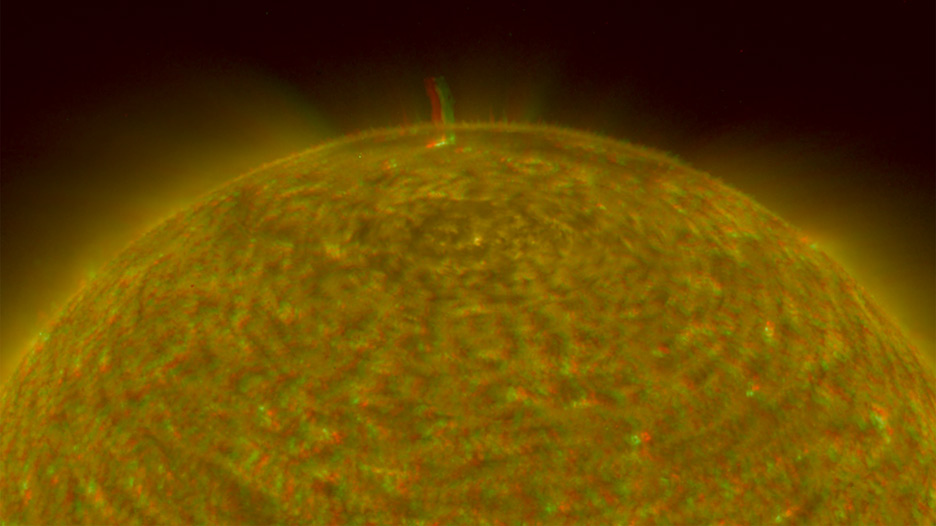
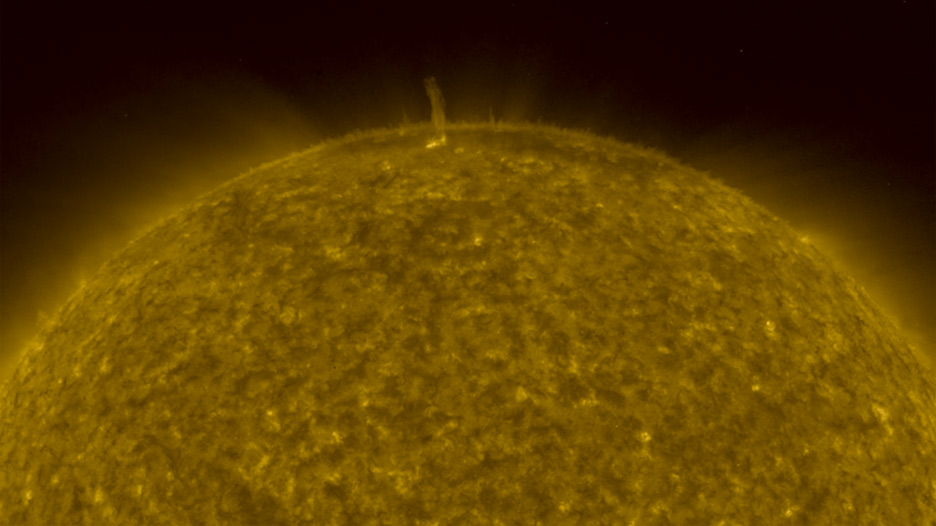
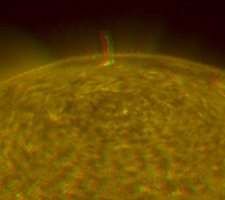
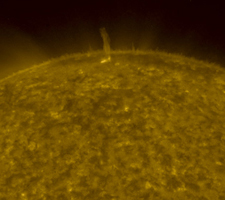
<description><![CDATA[<p>A spicule pokes out above the Sun's North Pole region on March 20, 2007 in this closer view.  The 3D image was created from two spacecraft by combining images in three extreme ultraviolet wavelengths: 304, 171 and 195 angstroms from each.</p><table><tr><td height="210" colspan="2"><img src="http://stereo.gsfc.nasa.gov/img/3dimages/preview/3dnpole_spicule_preview.jpg" alt="3D Spicule" class="photo" /></td><td width="10"></td><td colspan="2"><img src="http://stereo.gsfc.nasa.gov/img/3dimages/preview/2dnpole_spicule_preview.jpg" alt="2D Spicule" class="photo" /></td></tr><tr><td width="48" height="60" style="padding:0 5px 0 0"><img src="http://stereo.gsfc.nasa.gov/img/jpg-icon.jpg" alt="JPG" /></td><td width="175"><small><strong>JPG:</strong><br /><a href="http://stereo.gsfc.nasa.gov/img/3dimages/preview/northPole_HD_Cglyph_3D.jpg">936 x 526</a></small></td><td width="10"></td><td width="50" style="padding:0 5px 0 0"><img src="http://stereo.gsfc.nasa.gov/img/jpg-icon.jpg" alt="JPG" /></td><td width="173"><small><strong>JPG:</strong><br /><a href="http://stereo.gsfc.nasa.gov/img/3dimages/preview/northPole-HD_LFT_ed.jpg">936 x 526</a></small></td></tr><tr><td style="padding:0 5px 0 0"><img src="http://stereo.gsfc.nasa.gov/img/tiff-icon.jpg" alt="TIFF" /></td><td><small><strong>TIFF:</strong><br /><a href="http://stereo.gsfc.nasa.gov/img/3dimages/print/northPole_HD_Cglyph_3D.tif">Print Ready TIFF</a></small></td><td width="10"></td><td style="padding:0 5px 0 0"><img src="http://stereo.gsfc.nasa.gov/img/tiff-icon.jpg" alt="TIFF" /></td><td><small><strong>TIFF:</strong><br /><a href="http://stereo.gsfc.nasa.gov/img/3dimages/print/northPole-HD_LFT_ed.tif">Print Ready TIFF</a></small></td></tr></table><br /><hr /><table><p>A spicule pokes out above the Sun's North Pole region on March 20, 2007 in this full disk view.  The 3D image was created from two spacecraft by combining images in three extreme ultraviolet wavelengths: 304, 171 and 195 angstroms from each.</p><tr><td height="210" colspan="2"><img src="http://stereo.gsfc.nasa.gov/img/3dimages/preview/3dnpole_spicule_fulldisk_preview.jpg" alt="3D Fulldisk Spicule" class="photo" /></td><td width="10"></td><td colspan="2"><img src="http://stereo.gsfc.nasa.gov/img/3dimages/preview/2dnpole_spicule_fulldisk_preview.jpg" alt="2D Fulldisk Spicule" class="photo" /></td></tr><tr><td width="48" height="60" style="padding:0 5px 0 0"><img src="http://stereo.gsfc.nasa.gov/img/jpg-icon.jpg" alt="JPG" /></td><td width="175"><small><strong>JPG:</strong><br /><a href="http://stereo.gsfc.nasa.gov/img/3dimages/preview/NPOLE_20070320_fullres_3D.jpg">864 x 754</a></small></td><td width="10"></td><td width="50" style="padding:0 5px 0 0"><img src="http://stereo.gsfc.nasa.gov/img/jpg-icon.jpg" alt="JPG" /></td><td width="173"><small><strong>JPG:</strong><br /><a href="http://stereo.gsfc.nasa.gov/img/3dimages/preview/NPOLE_20070320_fullres_FD.jpg">864 x 847</a></small></td></tr><tr><td style="padding:0 5px 0 0"><img src="http://stereo.gsfc.nasa.gov/img/tiff-icon.jpg" alt="TIFF" /></td><td><small><strong>TIFF:</strong><br /><a href="http://stereo.gsfc.nasa.gov/img/3dimages/print/NPOLE_20070320_fullres_3D.tif">Print Ready TIFF</a></small></td><td width="10"></td><td style="padding:0 5px 0 0"><img src="http://stereo.gsfc.nasa.gov/img/tiff-icon.jpg" alt="TIFF" /></td><td><small><strong>TIFF:</strong><br /><a href="http://stereo.gsfc.nasa.gov/img/3dimages/print/NPOLE_20070320_fullres_FD.tif">Print Ready TIFF</a></small></td></tr></table>]]></description>
<link>/gallery/item.shtml</link>
<thumbnail>/img/3dimages/3dspicule_thumb.jpg</thumbnail>
<images />
<movies />
<prints />
</item>

<item id="19" cat="3d">
<title>3D Active Region - March 23, 2007</title>
<description><![CDATA[<p>An active region (brighter area) on the Sun from March 23, 2007. The 3D image was created from two spacecraft by combining images in three extreme ultraviolet wavelengths: 304, 171 and 195 angstroms from each.  A coronal hole (darker area) is right of center.</p><table><tr><td height="210" colspan="2"><img src="http://stereo.gsfc.nasa.gov/img/3dimages/preview/3dactive_20070323_preview.jpg" alt="STEREO Spacecraft" class="photo" /></td><td width="13"></td><td colspan="2"><img src="http://stereo.gsfc.nasa.gov/img/3dimages/preview/active_20070323_preview.jpg" alt="STEREO Spacecraft" class="photo" /></td></tr><tr><td width="45" height="53" style="padding:0 5px 0 0"><img src="http://stereo.gsfc.nasa.gov/img/jpg-icon.jpg" alt="JPG" /></td><td width="179"><small><strong>JPG:</strong><br /><a href="http://stereo.gsfc.nasa.gov/img/3dimages/preview/ACTIVE_20070323_fullres_FD_3D.jpg">864 x 805</a></small></td><td width="13"></td><td width="44" style="padding:0 5px 0 0"><img src="http://stereo.gsfc.nasa.gov/img/jpg-icon.jpg" alt="JPG" /></td><td width="195"><small><strong>JPG:</strong><br /><a href="http://stereo.gsfc.nasa.gov/img/3dimages/preview/ACTIVE_20070323_full_FD_LFT.jpg">864 x 883</a></small></td></tr><tr><td style="padding:0 5px 0 0"><img src="http://stereo.gsfc.nasa.gov/img/tiff-icon.jpg" alt="TIFF" /></td><td><small><strong>TIFF:</strong><br /><a href="http://stereo.gsfc.nasa.gov/img/3dimages/print/ACTIVE_20070323_fullres_FD_3D.tif">Print Ready TIFF</a></small></td><td width="13"></td><td style="padding:0 5px 0 0"><img src="http://stereo.gsfc.nasa.gov/img/tiff-icon.jpg" alt="TIFF" /></td><td><small><strong>TIFF:</strong><br /><a href="http://stereo.gsfc.nasa.gov/img/3dimages/print/ACTIVE_20070323_full_FD_LFT.tif">Print Ready TIFF</a></small></td></tr></table>]]></description>
<link>/gallery/item.shtml</link>
<thumbnail>/img/3dimages/3dactive02_thumb.jpg</thumbnail>
<images />
<movies />
<prints />
</item>

<item id="18" cat="3d">
<title>Fulldisk 3D Active Regions - March 26, 2007</title>
<description><![CDATA[<p>This image from March 26, 2007 also shows two active regions (brighter areas) and a coronal hole (darker area right of center).  The 3D image was created from two spacecraft by combining images in three extreme ultraviolet wavelengths: 304, 171 and 195 angstroms from each.  A coronal hole (darker area) is right of center.</p><table><tr><td height="210" colspan="2"><img src="http://stereo.gsfc.nasa.gov/img/3dimages/preview/3dfull_20070323_preview.jpg" alt="3D Active Regions 03/26/07" class="photo" /></td><td width="10"></td><td colspan="2"><img src="http://stereo.gsfc.nasa.gov/img/3dimages/preview/full_20070323_preview.jpg" alt="2D Active Regions 03/26/07" class="photo" /></td></tr><tr><td width="47" height="52" style="padding:0 5px 0 0"><img src="http://stereo.gsfc.nasa.gov/img/jpg-icon.jpg" alt="JPG" /></td><td width="176"><small><strong>JPG:</strong><br /><a href="http://stereo.gsfc.nasa.gov/img/3dimages/preview/full_HD_20070326_Cglyph_3D.jpg">864 x 717</a></small></td><td width="10"></td><td width="47" style="padding:0 5px 0 0"><img src="http://stereo.gsfc.nasa.gov/img/jpg-icon.jpg" alt="JPG" /></td><td width="176"><small><strong>JPG:</strong><br /><a href="http://stereo.gsfc.nasa.gov/img/3dimages/preview/FULL_20070326_fullres_LFT.jpg">864 x 757</a></small></td></tr><tr><td width="47" style="padding:0 5px 0 0"><img src="http://stereo.gsfc.nasa.gov/img/tiff-icon.jpg" alt="TIFF" /></td><td width="176"><small><strong>TIFF:</strong><br /><a href="http://stereo.gsfc.nasa.gov/img/3dimages/print/full_HD_20070326_Cglyph_3D.tif">Print Ready Tiff</a></small></td><td width="10"></td><td style="padding:0 5px 0 0"><img src="http://stereo.gsfc.nasa.gov/img/tiff-icon.jpg" alt="TIFF" /></td><td><small><strong>TIFF:</strong><br /><a href="http://stereo.gsfc.nasa.gov/img/3dimages/print/FULL_20070326_fullres_LFT.tif">Print Ready Tiff</a></small></td></tr></table>]]></description>
<link>/gallery/item.shtml</link>
<thumbnail>/img/3dimages/3dFD02_thumb.jpg</thumbnail>
<images />
<movies />
<prints />
</item>

<item id="17" cat="3d">
<title>EUVI Full disk sequence - March 17-27, 2007</title>
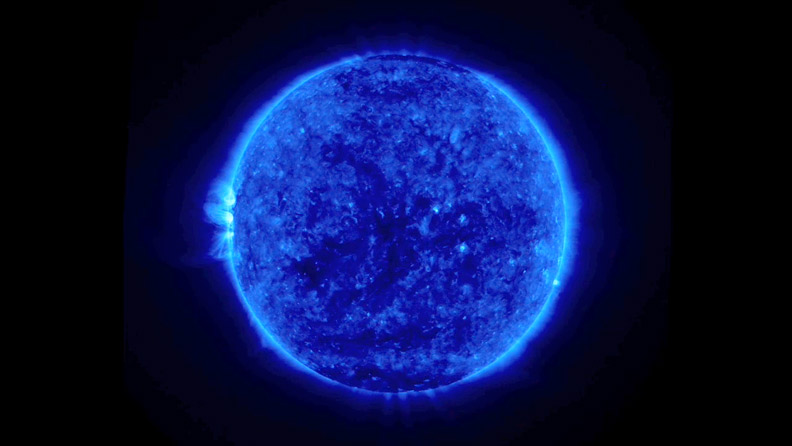
<description><![CDATA[<p>Full disk sequence of images covering March 17-27, 2007 taken by the EUVI telescope in the 171 angstroms wavelength.</p><table><tr><td height="210" colspan="2"><img src="http://stereo.gsfc.nasa.gov/img/3dimages/preview/3dfulldisk.jpg" alt="3d Full Disk" class="photo" /></td><td width="10"></td><td colspan="2"><img src="http://stereo.gsfc.nasa.gov/img/3dimages/preview/2dfulldisk.jpg" alt="STEREO Spacecraft" class="photo" /></td></tr><tr><td width="48" height="60" style="padding:0 5px 0 0"><img src="http://stereo.gsfc.nasa.gov/img/quicktime-icon.jpg" alt="Quicktime" title="Quicktime Movie" /></td><td width="175"><small><strong>Quicktime:</strong><br /><a href="http://stereo.gsfc.nasa.gov/img/3dimages/movies/171_Full_Disk_Ana_sm.mov">Lo-Res</a> (1.66 mb)<br /><a href="http://stereo.gsfc.nasa.gov/img/3dimages/movies/171_Full_Disk_Ana.mov">Hi-Res</a> (8.67 mb)<br /></small></td><td width="10"></td><td width="50" style="padding:0 5px 0 0"><img src="http://stereo.gsfc.nasa.gov/img/quicktime-icon.jpg" alt="Quicktime" title="Quicktime Movie" /></td><td width="173"><small><strong>Quicktime:</strong><br /><a href="http://stereo.gsfc.nasa.gov/img/3dimages/movies/171_Full_Disk_Right_sm.mov">Lo-Res</a> (3.87 mb)<br /><a href="http://stereo.gsfc.nasa.gov/img/3dimages/movies/171_Full_Disk_Right.mov">Hi-Res</a> (16.41 mb)</small></td></tr><tr><td style="padding:0 5px 0 0"><img src="http://stereo.gsfc.nasa.gov/img/windows-icon.jpg" alt="Windows" title="MPEG Movie" /></td><td><small><strong>MPEG:</strong><br /><a href="http://stereo.gsfc.nasa.gov/img/3dimages/movies/171_Full_Disk_Ana.mpg">Hi-Res</a> (11.29 mb)</small></td><td width="10">&nbsp;</td><td style="padding:0 5px 0 0"><img src="http://stereo.gsfc.nasa.gov/img/jpg-icon.jpg" alt="JPG" title="JPG" /></td><td><small><strong>JPG:</strong><br /><a href="http://stereo.gsfc.nasa.gov/img/3dimages/preview/171_Full_Disk_Right.jpg">792 x 446 JPG</a></small></td></tr></table>]]></description>
<link>/gallery/item.shtml</link>
<thumbnail>/img/3dimages/3dFD_thumb.jpg</thumbnail>
<images />
<movies />
<prints />
</item>

<item id="16" cat="3d">
<title>EUVI 171 A sequence - March 17-27, 2007</title>
<description><![CDATA[<p>Sequence of images covering March 17-27, 2007 taken by the EUVI telescope in the 171 angstroms wavelength, showing a portion of the equatorial region of the solar disk to provide a close up view of the active region (brighter area with loops arcing above it).</p><table><tr><td colspan="2"><img src="http://stereo.gsfc.nasa.gov/img/3dimages/preview/3dactive_region.jpg" alt="STEREO Spacecraft" class="photo" /></td><td width="10"></td><td colspan="2"><img src="http://stereo.gsfc.nasa.gov/img/3dimages/preview/2dactive_region.jpg" alt="STEREO Spacecraft" class="photo" /></td></tr><tr><td style="padding:10px 0 0 0" width="41"><img src="http://stereo.gsfc.nasa.gov/img/tiff-icon.jpg" alt="jpg" /></td><td style="padding:10px 0 0 0" width="182"><small><strong>TIFF:</strong><br /><a href="http://stereo.gsfc.nasa.gov/img/3dimages/preview/171_Active_Region_Ana.jpg">792 x 446 JPG</a></small></td><td></td><td style="padding:10px 0 0 0" width="46"><img src="http://stereo.gsfc.nasa.gov/img/quicktime-icon.jpg" alt="Quicktime" title="Quicktime Movie" /></td><td style="padding:10px 0 0 0" width="193"><small><strong>Quicktime:</strong><br /><a href="http://stereo.gsfc.nasa.gov/img/3dimages/movies/171_Active_Region_L_sm.mov">Hi-Res</a> (10.27)<br /><a href="http://stereo.gsfc.nasa.gov/img/3dimages/movies/171_Active_Region_L.mov">HD</a> (42.43 mb)</small></td></tr></table>]]></description>
<link>/gallery/item.shtml</link>
<thumbnail>/img/3dimages/3dactive_thumb.jpg</thumbnail>
<images />
<movies />
<prints />
</item>

<item id="15" cat="3d">
<title>3-D Left Right Images</title>
<description><![CDATA[ ]]></description>
<link>http://www.nasa.gov/mission_pages/stereo/multimedia/LeftRightImages.html</link>
<thumbnail>/img/3dimages/3dpairs_thumb.jpg</thumbnail>
<images />
<movies />
<prints />
</item>

<item id="14" cat="3d">
<title>Hi-Res Animation of the STEREO Fly by in 3D</title>
<description><![CDATA[ ]]></description>
<link>http://svs.gsfc.nasa.gov/vis/a010000/a010100/a010112/</link>
<thumbnail>/img/3dimages/FlyBy_thumb.jpg</thumbnail>
<images />
<movies />
<prints />
</item>

<item id="13" cat="3d">
<title>How Does STEREO make 3D images?</title>
<description><![CDATA[ ]]></description>
<link>http://svs.gsfc.nasa.gov/vis/a010000/a010100/a010113/</link>
<thumbnail>/img/3dimages/how3d_thumb.jpg</thumbnail>
<images />
<movies />
<prints />
</item>

<item id="12" cat="3d">
<title>Tour of the Magnetsphere in 3D</title>
<description><![CDATA[ ]]></description>
<link>http://svs.gsfc.nasa.gov/vis/a010000/a010100/a010111/</link>
<thumbnail>/img/3dimages/magnetoshpere_thumb.jpg</thumbnail>
<images />
<movies />
<prints />
</item>

<item id="11" cat="3d">
<title>Magnetic Reconnection</title>
<description><![CDATA[ ]]></description>
<link>http://svs.gsfc.nasa.gov/vis/a010000/a010100/a010110/</link>
<thumbnail>/img/3dimages/recon_thumb.jpg</thumbnail>
<images />
<movies />
<prints />
</item>

<item id="10" cat="3d">
<title>3D STEREO Spacecraft</title>
<description><![CDATA[<p>Illustration of one of the STEREO spacecraft in space.</p>]]></description>
<link>/gallery/item.shtml</link>
<thumbnail>/img/3dimages/3dstereo_thumb.jpg</thumbnail>
<images>
	<image>/img/3dimages/preview/3dstereo_web.jpg</image>
</images>
<movies />
<prints>
	<print>/img/3dimages/print/3dstereo_hi-res.jpg</print>
</prints>
</item>

<item id="9" cat="3d">
<title>STEREO Fields of view</title>
<description><![CDATA[<p>The fields of view of STEREO instruments when they are 38 degrees apart from each other</p>]]></description>
<link>/gallery/item.shtml</link>
<thumbnail>/img/3dimages/3dorbit_thumb.jpg</thumbnail>
<images>
	<image>/img/3dimages/preview/3dorbit_web.jpg</image>
</images>
<movies />
<prints>
	<print>/img/3dimages/print/3dorbit_full.tif</print>
</prints>
</item>

<item id="8" cat="3d">
<title>STEREO Illustration</title>
<description><![CDATA[<p>Both spacecraft watching the Sun shown in front of a fanciful banner.</p>]]></description>
<link>/gallery/item.shtml</link>
<thumbnail>/img/3dimages/3dstereo_thumb2.jpg</thumbnail>
<images>
	<image>/img/3dimages/preview/3dstereo2_web.jpg</image>
</images>
<movies />
<prints>
	<print>/img/3dimages/print/20060524_banner3D.tif</print>
</prints>
</item>

<item id="7" cat="3d">
<title>STEREO Spacecraft Animation</title>
<description><![CDATA[ ]]></description>
<link>/gallery/item.shtml</link>
<thumbnail>/img/animations/spacecraft_thumb12.jpg</thumbnail>
<images>
	<image>/img/spacecraft/preview/STEREO_3D.jpg</image>
</images>
<movies>
	<movie type="mov" movietitle="Stereo3Danag_scturns.mov - (15 mb)" movielink="/img/spacecraft/movies/Stereo3Danag_scturns.mov" />
	<movie type="mov" movietitle="137613main_STEREO3D2.mov_NASA20WebV_1.mpg - (523 kb)" movielink="/mpg/137613main_STEREO3D2.mov_NASA%20WebV_1.mpg" />
</movies>
<prints>
	<print>/img/spacecraft/print/STEREO_3D.tif</print>
</prints>
</item>

<item id="6" cat="3d">
<title>3-D coronal loop model</title>
<description><![CDATA[ ]]></description>
<link>http://svs.gsfc.nasa.gov/vis/a000000/a003200/a003286/</link>
<thumbnail>/img/3dimages/3d_coronalloop.jpg</thumbnail>
<images />
<movies />
<prints />
</item>

<item id="5" cat="3d">
<title>STEREO Instruments in 3D</title>
<description><![CDATA[<p>The STEREO/SECCHI forward facing imagers including the EUVI, Cor1, Cor2, and a guide telescope. SECCHI's Heliospheric Imagers, not shown in this image, are mounted separately on the spacecraft so that they point out to the side. Image taken in a clean room that the Naval Research Laboratory</p>]]></description>
<link>/gallery/item.shtml</link>
<thumbnail>/img/3dimages/nrl_thumb.jpg</thumbnail>
<images>
	<image>/img/3dimages/preview/nrl.jpg</image>
</images>
<movies />
<prints />
</item>

<item id="4" cat="3d">
<title>STEREO Instruments in 3D</title>
<description><![CDATA[<p>One of the STEREO/SECCHI Cor1 coronagraphs, photographed at a clean room at NASA's Goddard Space Flight Center</p>]]></description>
<link>/gallery/item.shtml</link>
<thumbnail>/img/3dimages/cor1b_thumb.jpg</thumbnail>
<images>
	<image>/img/3dimages/preview/cor1_d.jpg</image>
</images>
<movies />
<prints />
</item>

<item id="3" cat="3d">
<title>STEREO Instruments in 3D</title>
<description><![CDATA[<p>One of the STEREO/SECCHI Cor1 coronagraphs, photographed at a clean room at NASA's Goddard Space Flight Center</p>]]></description>
<link>/gallery/item.shtml</link>
<thumbnail>/img/3dimages/cor1c_thumb.jpg</thumbnail>
<images>
	<image>/img/3dimages/preview/cor1_c.jpg</image>
</images>
<movies />
<prints />
</item>

<item id="2" cat="3d">
<title>STEREO Instruments in 3D</title>
<description><![CDATA[<p>One of the STEREO/SECCHI Cor1 coronagraphs, photographed at a clean room at NASA's Goddard Space Flight Center</p>]]></description>
<link>/gallery/item.shtml</link>
<thumbnail>/img/3dimages/cor1d_thumb.jpg</thumbnail>
<images>
	<image>/img/3dimages/preview/cor1_b.jpg</image>
</images>
<movies />
<prints />
</item>

<item id="1" cat="3d">
<title>STEREO Instruments in 3D</title>
<description><![CDATA[<p>One of the STEREO/SECCHI Cor1 coronagraphs, photographed at a clean room at NASA's Goddard Space Flight Center</p>]]></description>
<link>/gallery/item.shtml</link>
<thumbnail>/img/3dimages/cor1a_thumb.jpg</thumbnail>
<images>
	<image>/img/3dimages/preview/cor1_a.jpg</image>
</images>
<movies />
<prints />
</item>

</gallery>